



When a tree falls in Riverside Park, especially one as storied as a great oak, we are there to make its memory heard. On July 9th, a member of the Conservancy’s field staff alerted the team that one of Riverside Park’s oldest trees, fondly referred to by staff as “the Magnificent Oak,” was severely damaged in the previous night’s storm.
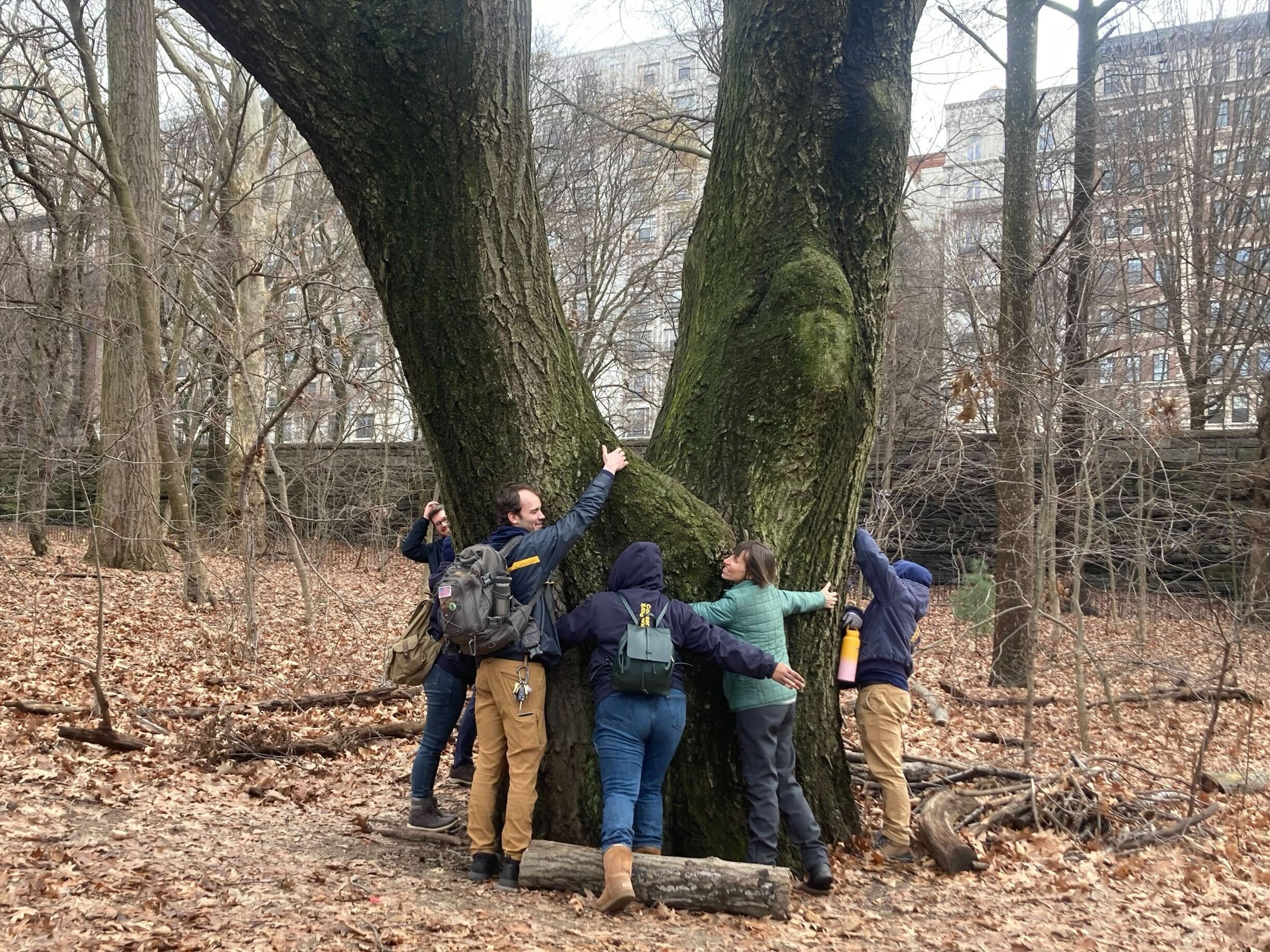
Located in Riverside Park’s “Forever Wild” section between 116th and 125th Streets, the Northern Red Oak tree (Quercus rubra) is estimated to be over 350 years old and had a diameter of 72 inches (last measured by NYC Parks). According to NYC Parks, this tree was responsible for intercepting roughly 9,000 gallons of water and removing 7 pounds of pollution each year.

Conservancy staff gathered together briefly as a community a few days later to honor the tree’s long life and legacy. The team reflected on the fact that this tree not only predates the existence of Riverside Park, but also the founding of the United States.
Jessica Kaplan, the Conservancy’s Director of Horticulture, shared more about the historical biodiversity of the area when the great oak began growing.
“Where our Magnificent oak stands, in the area once called Mannahatta by the Lenape, there would have been red maples, cinnamon ferns and American horn beans,” Jessica says. “Shrews, voles, and even the now extinct passenger pigeon would have lived with the oak. 56 species of animals would have found shelter, food and other resources from our oak! Over 324 species of plants lived in this area, which equaled to 85% more diversity than other areas in New York City at that time.”

In a farewell tribute poem written for the tree, Oliver Lopez remarked, “This Oak was not just wood and leaves… she offered shade, shelter, and beauty to all who passed by—birds, insects, children, neighbors, wanderers. For more than 350 years, she stood through storms and silence, through seasons, and the ever-changing rhythm of this city.”
As a member of the Conservancy’s field staff, Oliver leads nature walks in the park for neighbors of all ages and backgrounds. He invites them to remember “that nature is not a place we visit. It’s where we belong.” He ends each walk with a visit to the magnificent oak in hopes “those who stood beneath her would feel more connected to this Earth and one another.” In April, he led a walk for indigenous leaders and delegates to the UN; they ended as always at the oak tree and closed the walk with a tree hug.

Dozens of neighbors chimed in on the Conservancy’s social media to share their own personal stories and memories of the beautiful oak. On Instagram, @the_lead_balloon shared she “called that tree “the wishing tree” or “the grounding tree” for its wishbone-like split and its incredible centering energy and pull into the earth.”
President and CEO of Riverside Park Conservancy, Merritt Birnbaum, hopes to find a lasting way to honor the fallen oak’s memory in Riverside Park, perhaps through reclaiming some of the wood for a use in the park. Because the oak is located in the Forever Wild section of the park, the majority of the fallen tree will be left in place, once path safety issues are resolved, so that the decaying wood can nourish the soil and contribute to the health of the surrounding forest.
Oliver hopes “her memory reminds us how important it is to care for our parks, our trees, and the natural spaces that give so much to our communities.”
Although all trees are susceptible to significant injuries as they age, the last several years of budget cuts to NYC Parks are making it more challenging than ever for the City’s forestry division to adequately care for our urban forest. The Conservancy continues to urge City Hall to restore and baseline essential funding for the Parks Department.
Trained arborists are essential for delivering desperately needed maintenance to New York City’s tree infrastructure. Large trees like the fallen magnificent oak provide cooling, flood mitigation, habitat for wildlife, carbon sequestration, shade and natural beauty for all New Yorkers.
To help bring more trees to our City, the Conservancy launched a campaign to plant new trees along Riverside Drive. You can learn more and contribute to the More Trees, Less Trash campaign here.