



By Moira Delaney, Sustainability Coordinator & Jessica Kaplan, Director of Horticulture, Riverside Park Conservancy
Urban forests are essential to creating a healthy ecosystem and environment, especially in a dense city like New York. In the spirit of Climate Week, we are excited to reflect on the work we’ve done this summer to care for the forest in Riverside and beyond.
This past summer, the Conservancy was proud to work on a project that supported urban forests not only in Riverside Park, but also in Van Cortlandt Park, the third-largest park in New York City and the second-largest park in the Bronx.
In 2024, we collaborated with Van Cortlandt Park Alliance to apply for and receive a two-year “Pathways Grant” from the NYC Green Fund. This grant is supporting the creation of a toolkit for Urban Forest Management best practices, with the goal to help other park-based non-profits learn strategies for caring for their trees.
The Importance of Urban Forests
Our urban forests play a crucial role in mitigating the effects of climate change. We could not live in New York City without them. A healthy tree canopy helps reduce urban heat island effects through the process of evapotranspiration and by providing shade, which reduces surface temperatures.
Trees help slow down flooding effects by absorbing water. They stabilize our soils with their strong roots, which reduces soil erosion. Trees also absorb pollutants like ozone, nitrogen dioxide, and sulfur dioxide through their leaves and bark, filtering harmful particulate matter like dust, smoke, and pollen. These ecosystem services are crucial for our city’s functionality and they increase our resiliency during extreme weather conditions.
A Focus on Two Forests
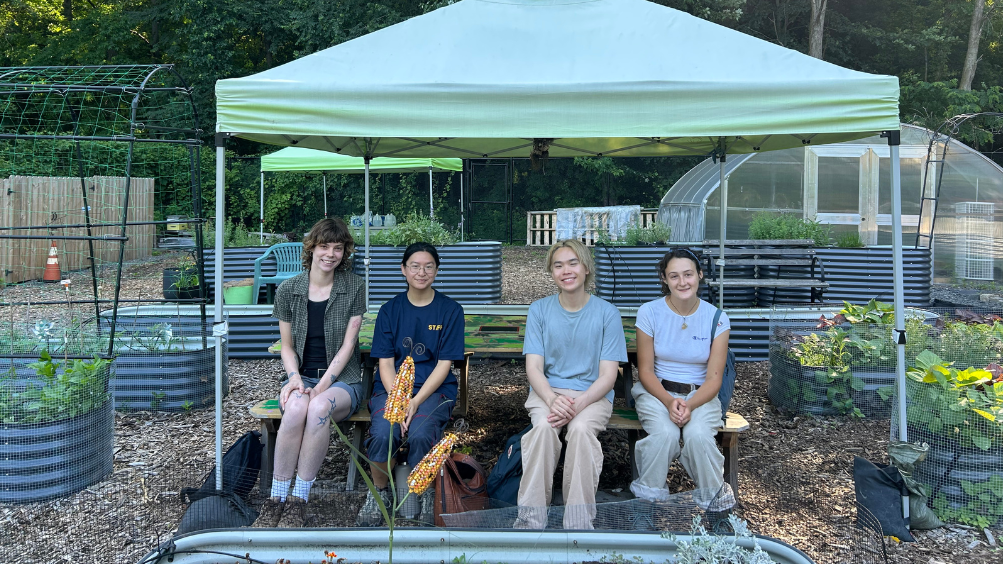
In the summer of 2025, we hired four Urban Forestry Interns to work in Riverside and Van Cortlandt Parks. These interns, both college students and recent college graduates, had a variety of backgrounds and interests, but the focus of their work with us was on the current state of trees in both parks. The goal was for both organizations to be able to better understand and map out the challenges of caring for our urban forests. 
Riverside and Van Cortlandt have many similarities, but also unique challenges. Both parks wanted to better understand species diversity and the pressure from invasive tree species. Our Riverside interns took a closer look at the area around Discovery Playground at 168th Street, as well as the tree health metrics of street trees along Riverside Drive. Interns in Van Cortlandt Park examined the Cross-Country trail to create an inventory of species that can aid the Alliance in trail maintenance decisions.
In Riverside Park, the interns’ survey uncovered pockets of native species among the vast proliferation of invasive species. The surveyed plot demonstrated a strong presence of native midstory trees, including Prunus serotina (Black Cherry) as well as Ulmus americana (American Elm). This inventory provided us with an understanding of the biggest challenges with the forest in this area of the park, while also showcasing some opportunities by demonstrating that the seedling and groundcover layers of the forest are predominately native. The interns put together a report outlining their findings and potential next steps for management in this area.
Throughout the summer, the interns also worked to assess the condition of the street trees on Riverside Drive. Using the Healthy Trees, Healthy Cities metrics, they assigned a score to each tree. These metrics will allow us to track our canopy over time and assess how certain species are handling the hardest job in NYC: being a street tree.
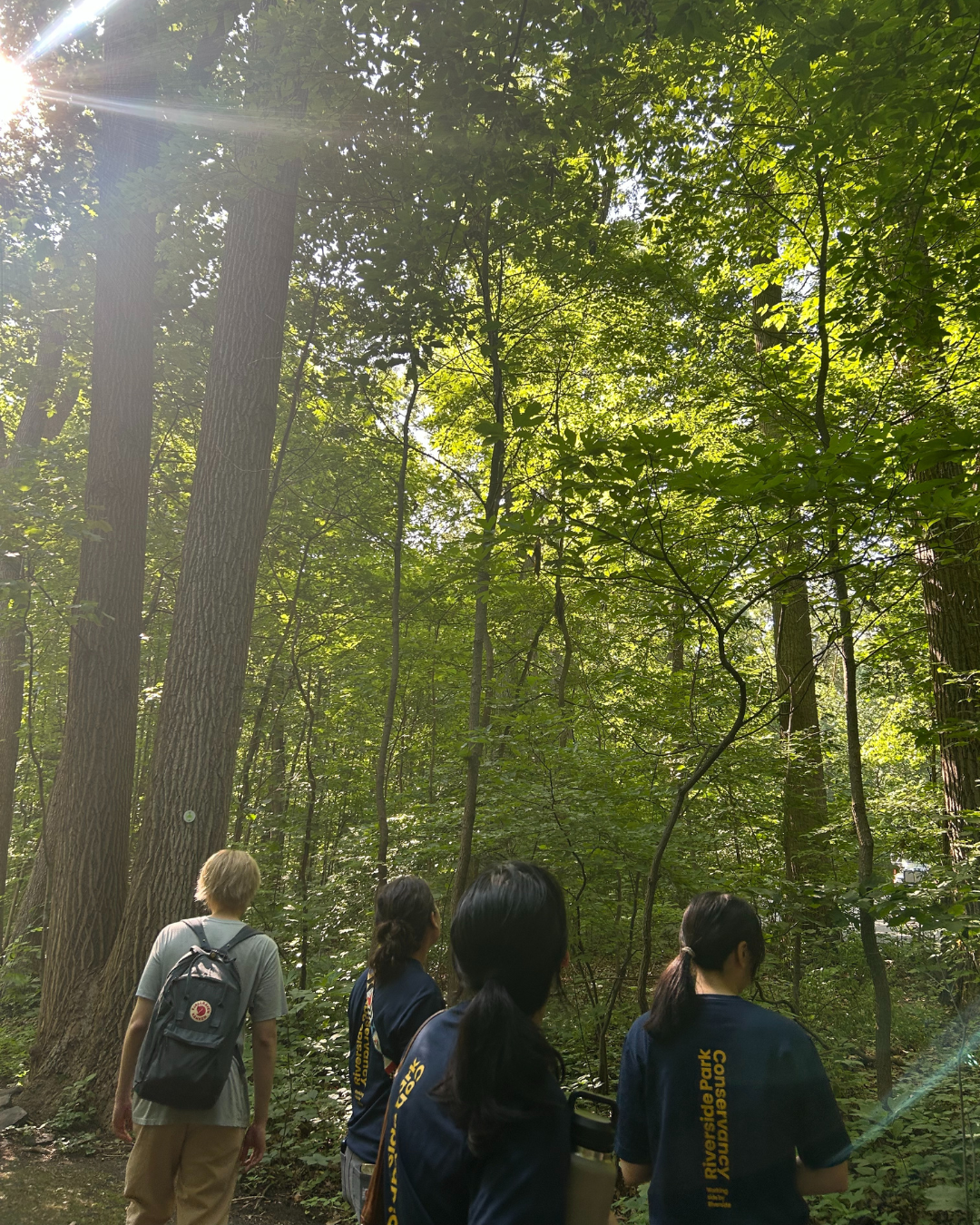
Van Cortlandt Park Alliance was interested to learn more about the species growing alongside the very popular Cross-Country trail, which turned out to be over 90% native! Thanks to the interns’ survey, the Alliance can focus its trail maintenance efforts on removing the invasive trees lining the trail that could become problematic in the future.
A Growing Forest, A Growing Team of Interns
Beyond their work with the trees, our interns had the opportunity to learn from professionals in the field. The group met with Riverside Park Conservancy staff for a panel to learn about their career paths and the work they do each day in the park. They also went on excursions to explore and develop a deeper understanding of both parks. The Conservancy and Alliance were proud to provide a collaborative experience for upcoming and recent graduates to explore careers in the field of urban forestry and horticulture. We are grateful for their hard work in our parks!