



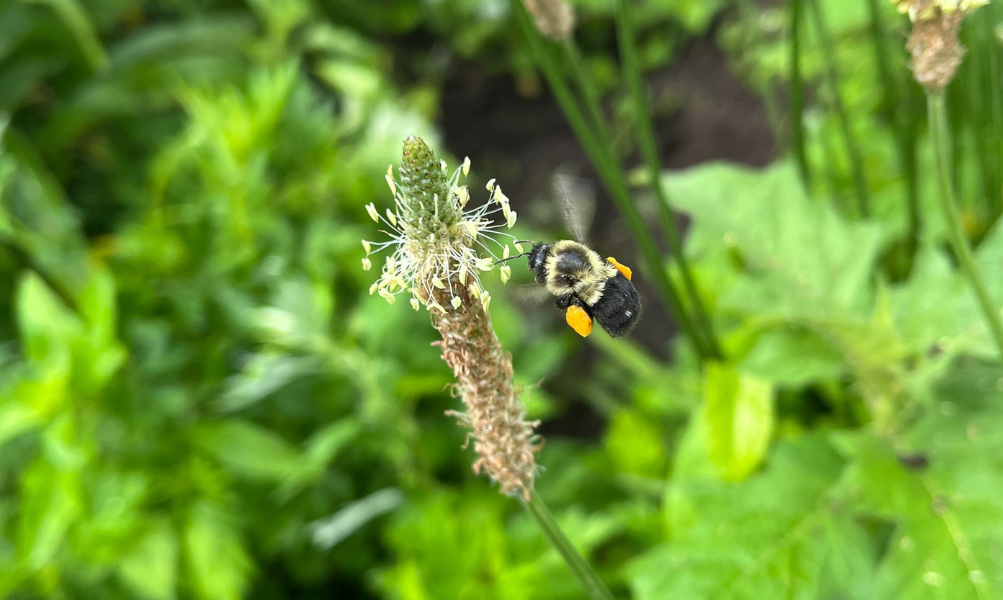
Parks and open spaces are crucial in supporting native bee populations and mitigating the global trend of population decline in bee species.
Bees are critical in maintaining biodiversity through their ability to pollinate while supporting the growth and reproduction of our native plants. Native bees, in particular, are highly efficient pollinators and support the reproduction of flowering plants.
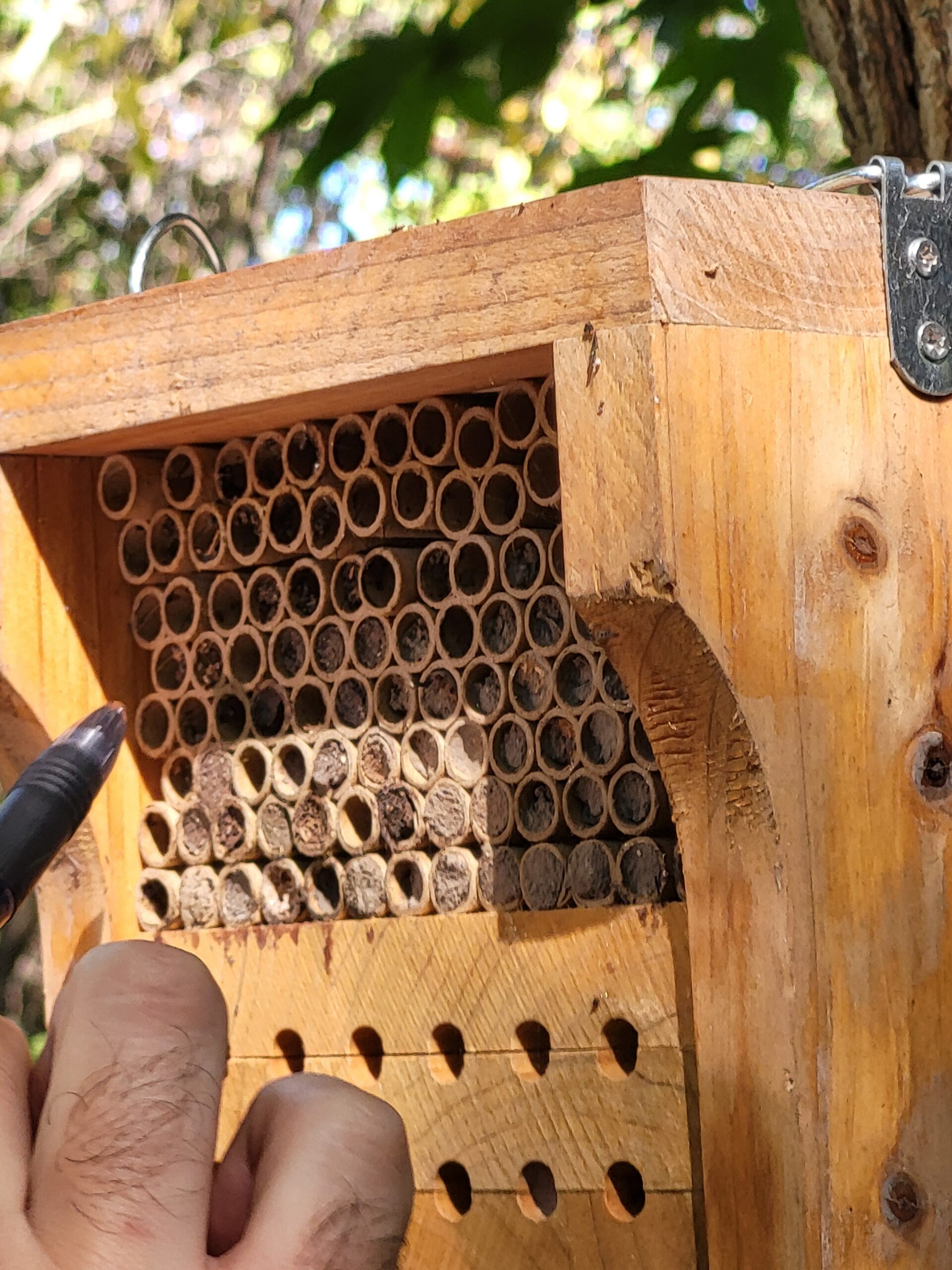
Since 2021, native bee sightings have increased as a result of the Conservancy’s bee house program and regenerative horticulture practices. The Conservancy has made efforts over the past five years to install the bee houses in strategic areas throughout the park, while monitoring pollinator activity throughout the year.
Much of our soil in Riverside Park is highly compacted, due to a mix of high usage and poor nutrient availability. This leads to, among other things, a lack of proper habitat for ground nesting bees. Our bee houses fill that gap, serving a similar purpose to bees as bird houses do to our sensitive bird populations. They provide shelter for our native solitary bees while emulating the nesting sites they would normally gravitate to. Our bee houses were made of paper tubes that mimic ground crevices, hollow plant stems, or woody material where a bee lays their eggs. In Riverside Park, the bee species we see most often include leafcutters, masons, carpenters, and sweat bees.
Over the past five years, our horticultural and field staff have grown and evolved. We hired a Director of Horticulture, Jessica Kaplan, in 2023 who has since advocated for native plantings that support pollinator species throughout the park. The native plant palettes Kaplan devised prioritized our pollinators year-round in each garden and meadow, making sure that we have pollen, nectar, and shelter available to attract and support pollinators.
There are over 200 species of native bees in New York City alone and over 3,600 in North America with more than 90% living a solitary life rather than living in community hives [source]. These solitary bees are docile and more efficient as pollinators than honeybees.

Honeybees receive a lot of attention from the public but are non-native and compete with our vital native solitary bee species, which are in decline throughout the Northeast, for the same resources. Pictured here is the invasive western honey bee.
Supporting native bees means that in Riverside Park we get to see healthier plants and better flowers throughout our 6 miles of parks. These bee houses have helped native bee populations in newly established gardens, and in areas of the park that we determined needed the support of artificial habitat while natural options were in the transitional state of becoming viable habitat. Important components of said habitat include access to safe nesting sites, nesting material, and diverse native plantings.
Our bee houses helped us get a baseline of information about what bees were in our park and how we could work to best support their population through native plantings with bloom times staggered throughout the year, soil amendment and aeration projects, and encouraging natural habitats for them to take refuge in.
RPC’s Maintenance Strategies
- Plant native species: stagger bloom times to attract pollinators throughout the year
- Leave the leaves and hollow stems in garden beds: our horticultural staff and our volunteers are encouraged to keep stems and fallen leaves in their garden beds over the winter as it provides nesting material for ground-nesting bees.
- Delay spring clean up: spring cleanup of gardens is delayed until temperatures are consistently above 50 degrees to protect overwintering bees. And in some areas, we can leave material standing or on the ground as future habitat.
- Reduce lawn areas: when and where appropriate, our director of horticultural and gardeners work together to identify appropriate spots for lawn conversions into meadows.
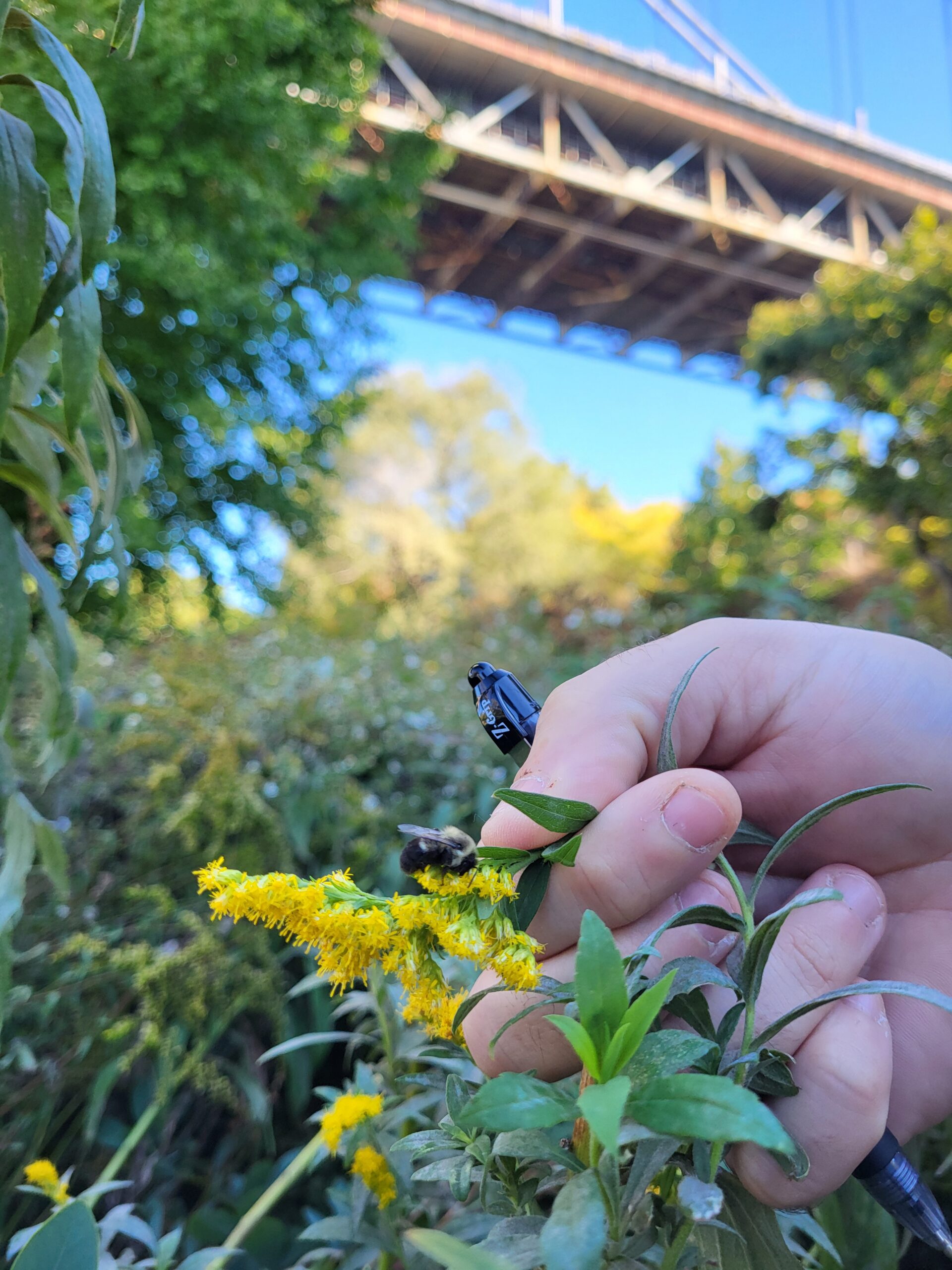
If you see any native bees in the park, please document them by taking a picture and uploading them to our project, Flora and Fauna in Riverside Park, on iNaturalist.