



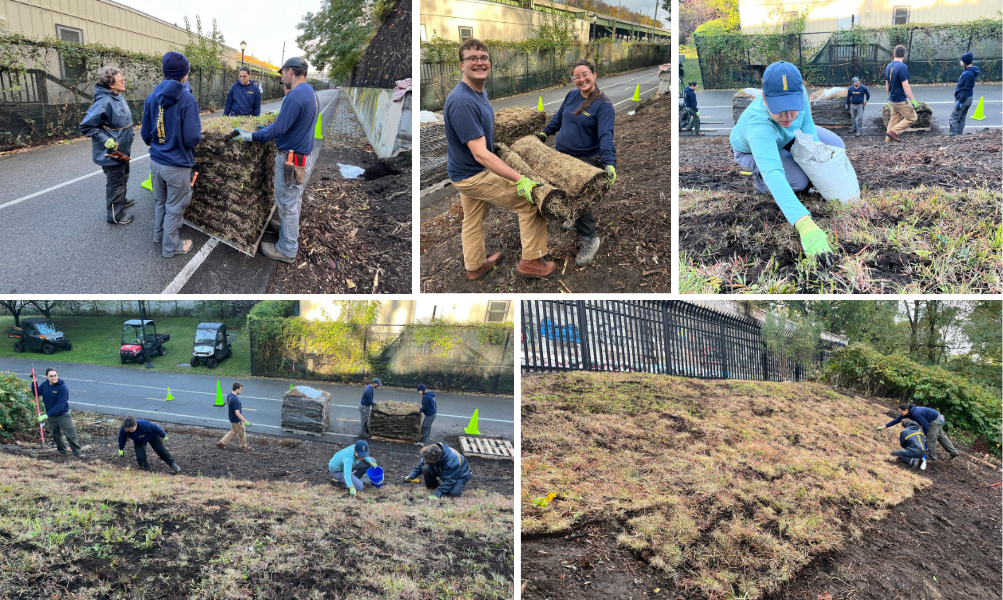
On a brisk morning in late October, Conservancy Zone Gardeners from across the park gathered under the Henry Hudson Parkway to meet a special delivery: native wildflower sod from Meadow Lab. The team was made up of gardeners from across the park who had come to learn together about this revolutionary new product and its applications in our park.
The installation was an exciting milestone in a two-year effort to restore a slope overrun by an invasive plant that is famously difficult to eradicate. Japanese knotweed, Reynoutria japonica, is an invasive species found in many areas of Riverside Park, including along the bike path in the West 140s. When left to spread, knotweed chokes out all other plant life and creates a harmful monoculture. The first phase of this project was to cut down the knotweed to prepare the slope for solarization.
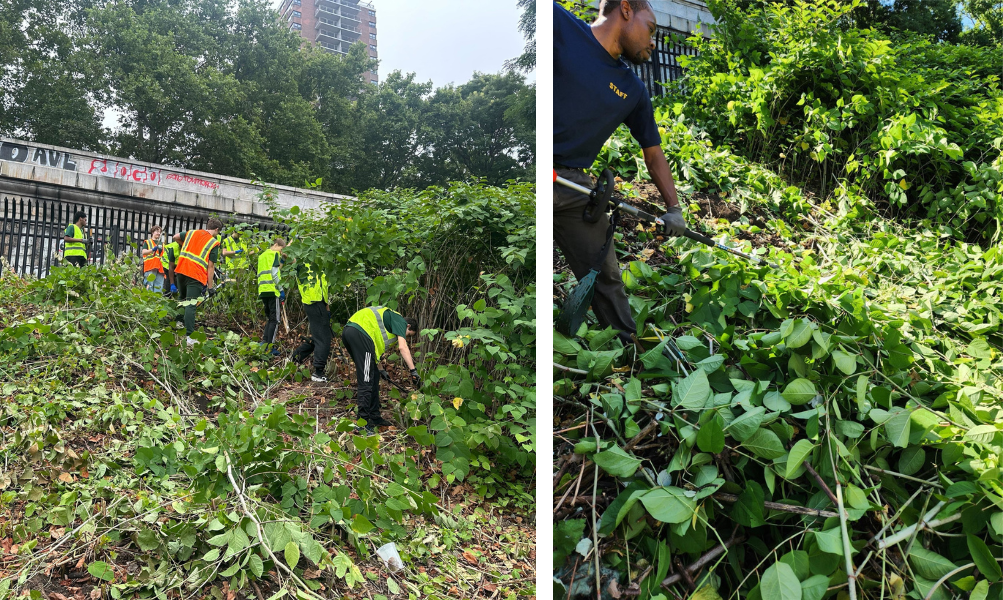
After intensive research, Jessica Kaplan (Director of Horticulture) and Manuel Alarcon (North Park Supervisor) embarked on the project’s second phase in the summer of 2024: solarization. Most gardeners avoid trying to solarize knotweed because it can withstand high heat and even puncture heavy-duty tarps. Jessica and Manuel, however, decided to combine methods and add another tactic: weight restriction. They laid a heavy metal mesh over the slope and covered it with clear solarizing plastic. The plastic trapped the sun’s heat, raising the soil temperature into the 140s—hot enough to kill knotweed seeds and limit their spread—while the mesh kept new shoots from pushing through the tarp.

By the end of summer 2025, enough progress had been made to launch the most exciting phase of the project: installing a revolutionary new product—wildflower sod—on the slope. Developed by Meadow Lab, this specially engineered “living carpet” is one of the first of its kind to be used in the United States, and Riverside Park is among the very first sites to pilot it. Instead of planting seeds and waiting years for a meadow to establish, Meadow Lab’s system combines a dense natural root mat with a curated mix of Northeast native wildflowers and grasses, pre-grown into a resilient layer designed to take hold quickly, outcompete weeds, and jump-start a thriving ecosystem.
On installation day, the wildflower sod arrived stacked high on three pallets, each square like a ready-made patch of meadow. The team carefully fitted the pieces into place on the steep slope in a brick-like pattern to promote stability and minimize gaps where weeds could sneak in. To secure the new meadow, they anchored each section with gardening staples and filled any remaining seams with a complementary native seed mix. In a single day, a once-bare, degraded slope was transformed into the foundation of a vibrant, climate-resilient wildflower habitat.
Runners, bikers and families walking on the Greenway will now have a new green corridor to enjoy. But the new meadow also has important ecological benefits to the area- it supports pollinators, boosts biodiversity and introduces native plants that strengthen the park’s ecological resilience.
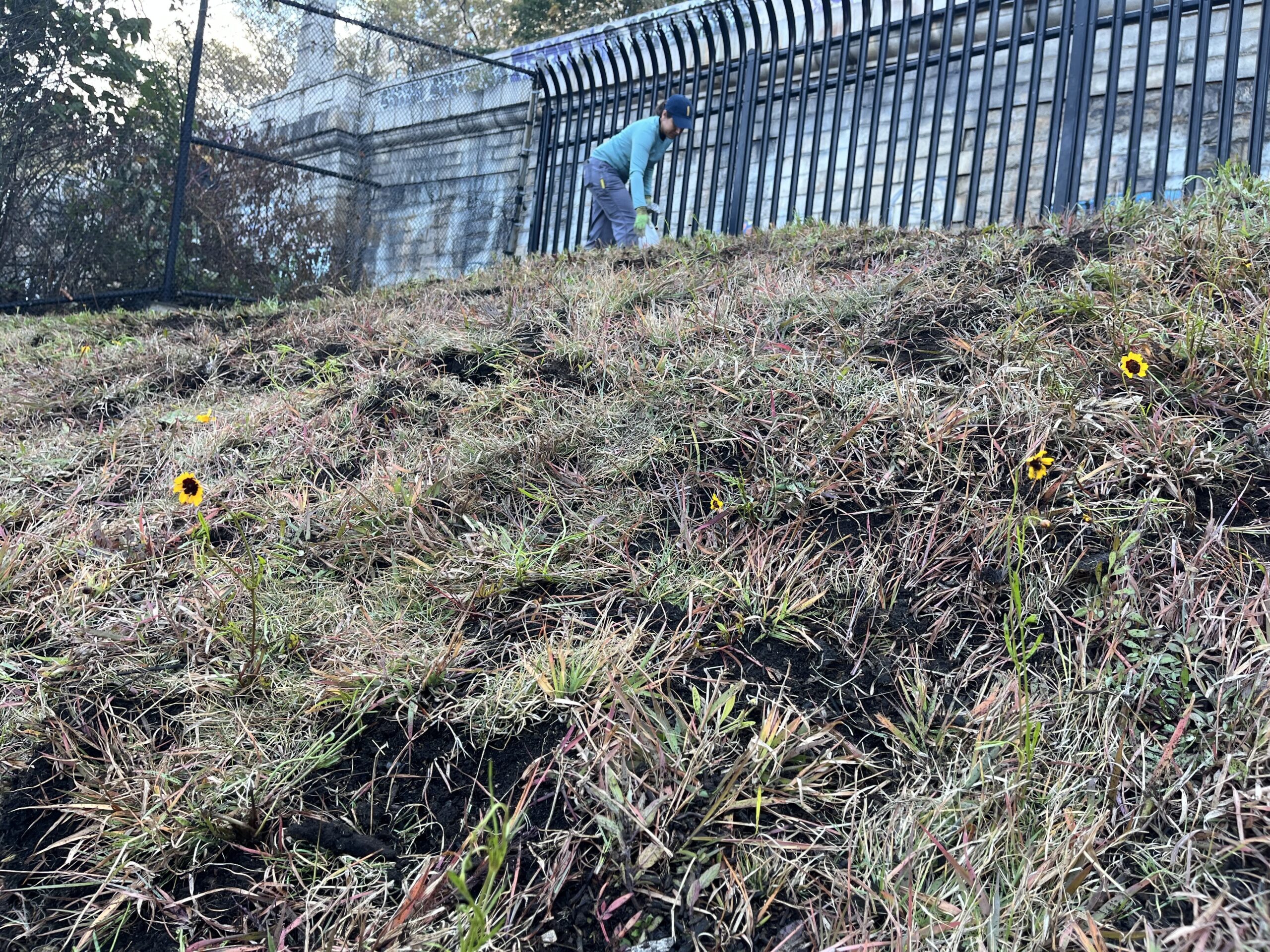
Keep an eye out for native grasses and wildflowers pushing up through the sod in the spring. Over time, the area will bloom into a tapestry of color. While the meadow takes root and matures, we ask visitors to stay on paths and enjoy the transformation from a distance. As the meadow grows and evolves over the coming seasons, Conservancy staff will continue to monitor and care for its development.
In New York City, every bit of parkland is important. The installation of this Meadow Lab sod represents a step towards smarter, greener public parks. The Conservancy is committed to more sustainable solutions and choosing native and resilient plant systems is just one example of that goal. We look forward to watching this meadow bloom together!