


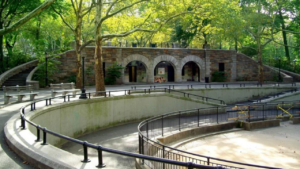

The challenges of aging infrastructure are felt across New York City’s Parks system, and Riverside Park is one of the hardest hit locations. Large portions of the Park are constructed on top of decades-old landfill, which naturally settles and becomes more porous over time. With drainage systems dating back to the 1930s now being forced to accommodate increasingly severe weather events, Riverside Park between 100th and 120th Streets is especially prone to extreme flooding. After a rainstorm, large pools of water remain in the park’s pathways and grassy areas.

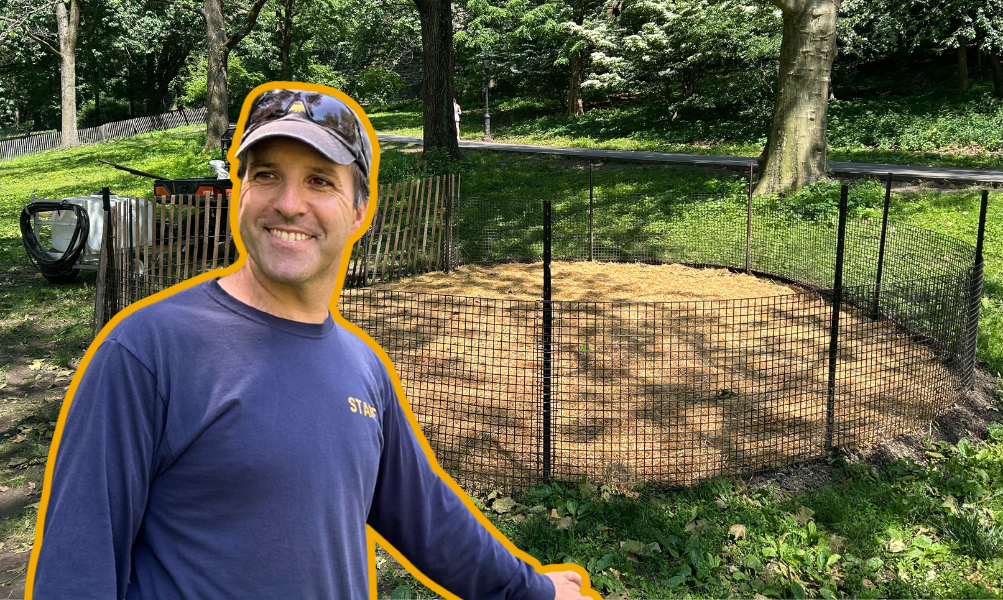
It’s an issue that Ben Adamo witnessed for years in his role as the Conservancy’s horticultural Field Supervisor for this section of Riverside Park.
This year, he moved into a newly created position as the leader of a Special Services Crew at Riverside Park Conservancy. Thanks to funding from Charina Endowment Fund, his position is focused on repair and restoration projects related to storm mitigation and erosion control.
Why Does Riverside Park Flood So Easily?
During storms, all the excess rainwater surges downhill to the park from Broadway. The century-old storm drains along Riverside Drive are no match for 21st-century weather events. Often clogged with tree roots and debris, these drains can barely handle a few inches of rain, let alone the torrents New York now regularly experiences. “The drains are being inundated,” Ben explains. “They can’t even catch what they originally were designed for.”
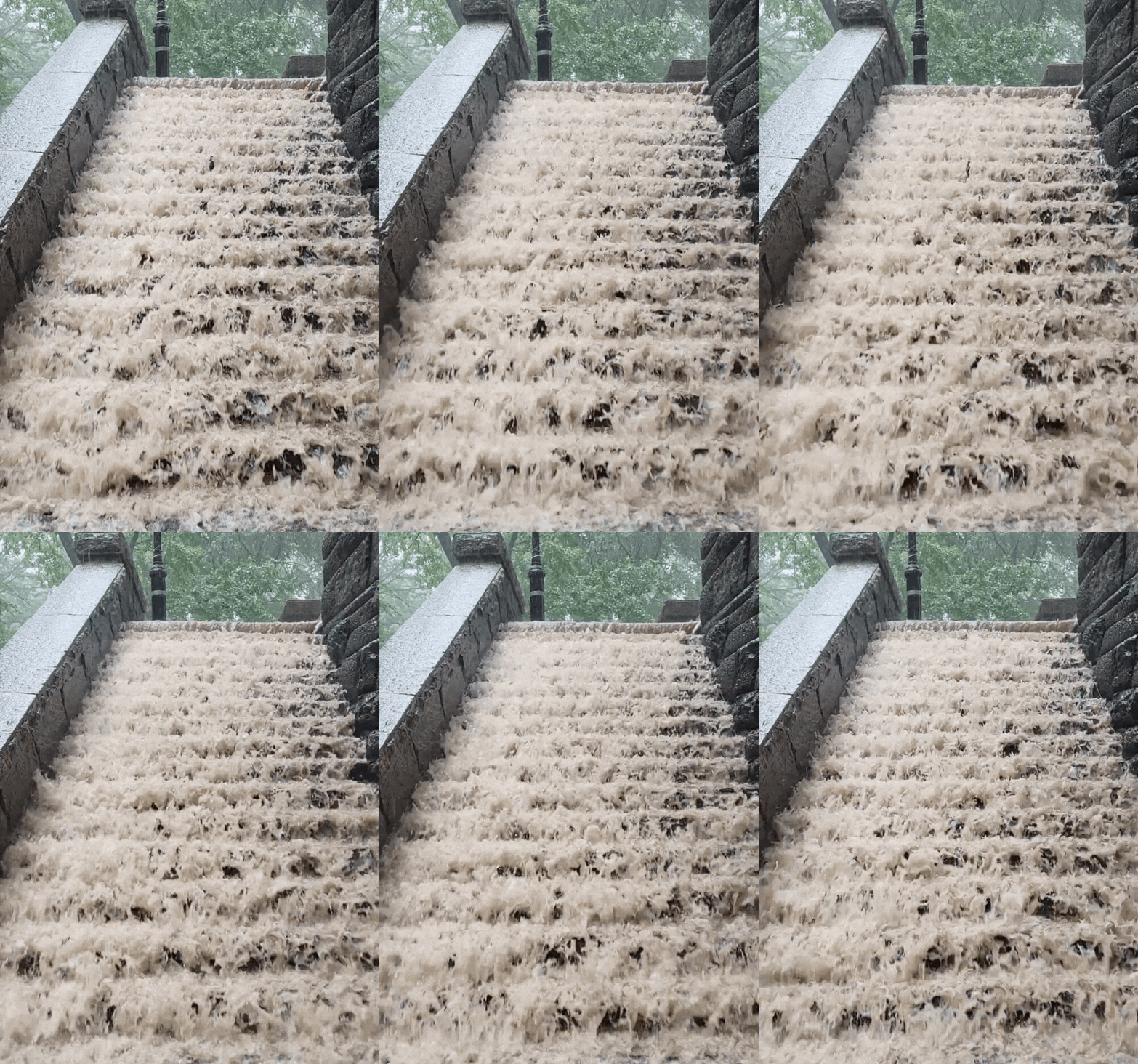
Beyond the Drive level, the water continues to flow down the park’s limited stairways, cascading into the park like a waterfall. Water also flows in from certain points beneath the historic “Olmsted wall” surrounding the park. It erodes channels between the upper path and the wall. Then, it crosses the path and continues to flow into the lower areas of the park where it creates flooded sections of standing water.
“Riverside Park is a beautiful park,” Ben says. “It bums me out that this section has so many spots that are just crumbling or they get filled in with sediment after a rainstorm.”
A combination of factors complicates the City and the Conservancy’s ability to address flooding, including the complex transportation infrastructure running through the very heart of the park. In 2021, a $348 million restoration project was introduced to rehabilitate the Amtrak “overbuild” infrastructure, a series of bridge structures built over the Amtrak train tunnels, which has caused damage to pathways, particularly Riverside Park’s beloved “promenade” section, and affected the park’s usability.
Currently, maintenance trucks and large park vehicles are prohibited from traversing the promenade due to structural safety concerns. This lack of access significantly hinders staff from getting around and doing their work, forcing them to modify how they operate. Tasks like clearing paths and emptying trash cans on the promenade must be done by hand, with heavy bags carried to vehicles waiting on the perimeter.
Underground water and old, filled-in creek beds are other major contributors to flooding. In the 1930s, under Robert Moses, an enormous amount of landfill was added to the Park to expand its acreage. “Anything on fill is going to settle or move,” Ben notes. “So, the fact the park is on fill is one of the reasons why a sinkhole appears. Over time, these voids begin to open up with storm water.”
Building Solid Ground: Filling in Sinkholes
One of Ben’s first projects in his new role is working to properly repair sinkholes on the sloped lawns in the 100’s.
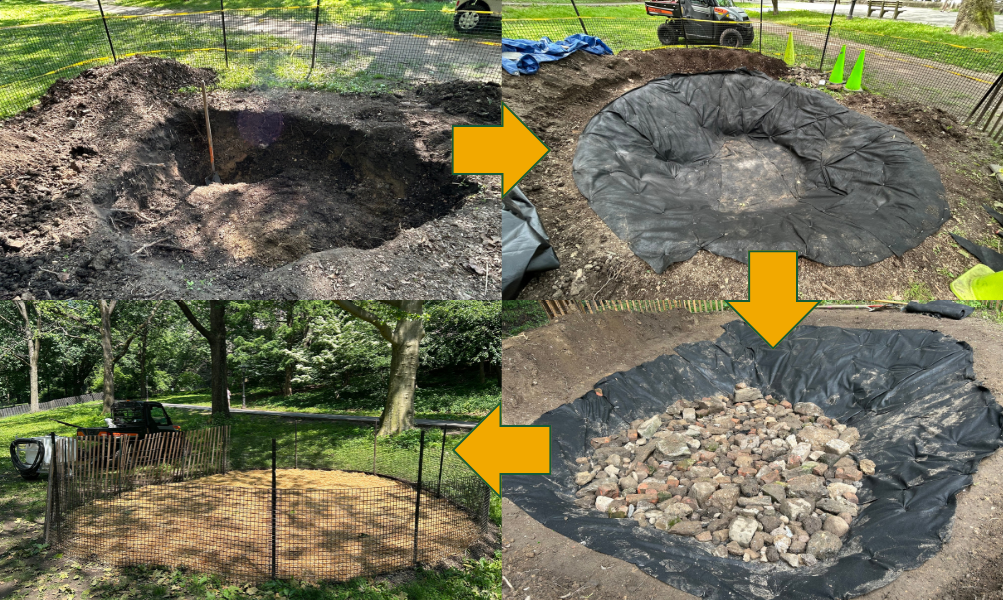
To fill a sinkhole, Ben begins by clearing all vegetation from the hole, including stubborn tree roots. From there, he excavates the soil until all voids (pockets created by water flow) are eliminated. He then waits for rain to pass, allowing the ground to reveal if any new voids open.
If the area remains stable, Ben compacts the soil in the opening by hand to establish a solid base. He then lays down geotextile fabric — a permeable landscape material — followed by a six-inch layer of large rocks. On top of that, he adds smaller gravel, compacting it in two-inch layers to prevent future settling. Finally, he tops it all off with fresh topsoil.
This type of repair work is a critical piece of the larger plan by the City to mitigate the damage caused by serial flooding in Riverside Park. In 2019, then Mayor Bill de Blasio allocated $11.5 million to begin addressing the chronic drainage problems in the Park, which was further augmented by $15 million in additional funding from Mayor Eric Adams. After an extensive research and engineering design phase, this fall NYC Parks will begin a major capital project to reconstruct the drainage infrastructure between 108th and 116th Street and add new green infrastructure like bioswales and “wet meadows.”
In the meantime, Ben is the type of person who gets a lot of satisfaction from getting right to work and tackling projects each day.
“My favorite thing of all time is to get things done,” Ben says. “And my list is ever growing. I like being productive, and I like enhancing gardens and lawns. I’m very happy to contribute to people enjoying these spaces.”
There’s a lot of public curiosity about what Ben does, especially by parkgoers who are in Riverside every day. “People are really happy to see that work is getting done,” Ben adds. “It’s not just getting ignored. Something is happening.”