



Late summer calls for a stroll in a meadow. Luckily, Riverside Park Conservancy has got you covered! Riverside Park and Fort Washington Park feature eight pollinator meadows, spanning across our 6 miles of parkland. These meadows look beautiful at this time of year, so it’s the perfect time to plan your next park adventure and visit the vibrant blooms.
Where are the pollinator meadows?
You can find pollinator meadows throughout the park: which one is closest to you?
- Little Red Lighthouse Pollinator Meadow (181st Street)
- 171st Street Pollinator Meadow
- ‘Pine Bluff’ Pollinator Meadow (163rd Street)
- 119th Street Pollinator Meadow
- ‘The Vale’ Pollinator Meadow (91st Street)
- 85th Street Slope Pollinator Meadow
- Riverside Park South Pollinator Meadow (66th Street)
- Riverside Park South Boardwalk Pollinator Beds (64th Street)
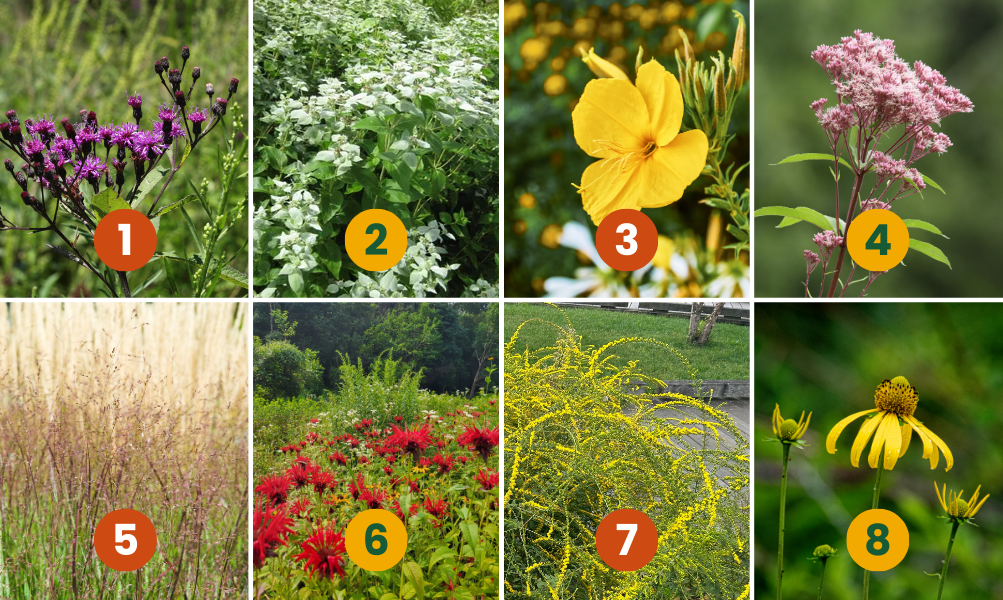
What’s in bloom right now?
- NY Ironweed: Vernonia noveboracensis
- Mountain Mint: Pycnanthemum muticum
- Evening Primrose: Oenothera biennis
- Joe Pye Weed: Eutrochium dubium
- Switchgrass: Panicum virgatum
- Scarlet beebalm: Monarda didyma
- Fireworks Goldenrod: Solidago rugosa ‘Fireworks’
- Cutleaf Coneflower: Rudbeckia laciniata
Why pollinator meadows?
Pollinator meadows provide necessary pollen and nectar resources for pollinators. Pollinators include native bees, butterflies, and even insects you wouldn’t necessarily think of, like flies. A pollinator’s job is an important one. Spending much of their day enjoying all the pollen and nectar they can all while pollinating flowers that will produce seeds and fruits for other birds and mammals to consume.
Unfortunately, pollinator populations have been declining. Habitat loss, pesticide usage, climate change, and many other factors have contributed to these losses. One of the most severe declines has been of monarch butterfly populations. To combat this, Riverside Park Conservancy focuses on planting species like milkweed to support this species. In our meadows you will find 3 species of milkweed, Asclepias inacrnata (swamp milkweed), Asclepias syriaca (common milkweed), and Asclepias tuberosa (butterflyweed).
“Milkweed’s foliage serves as the only host plant for monarch caterpillars which emerge from eggs laid on the plants leaves,” said Jessica Kaplan, Director of Horticulture. “Because our pollinator meadows have a wide variety of plant species, later emerging butterflies can source the nectar they need to thrive and carry on their long journey to Mexico.”
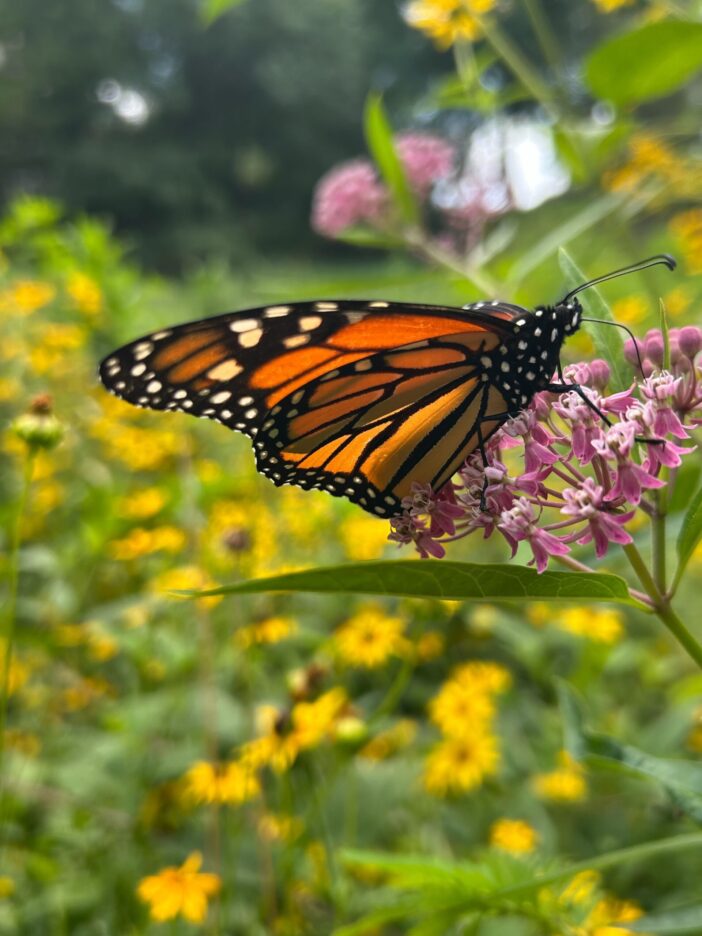
A monarch butterfly lands on milkweed at ‘The Vale’ around 91st Street. Photo by Marcus Caceres.
New York City’s pollinators face another challenge: limited resources. For example, honeybees, while helpful for creating honey, are nonnative to New York. These bees outcompete native bees, pollinating already crowded plants in urban areas like Manhattan. This creates a problem where there is not enough flowers to go around- imagine that! Our pollinator meadows are a necessary resource to ensure native pollinators have the resources they need.
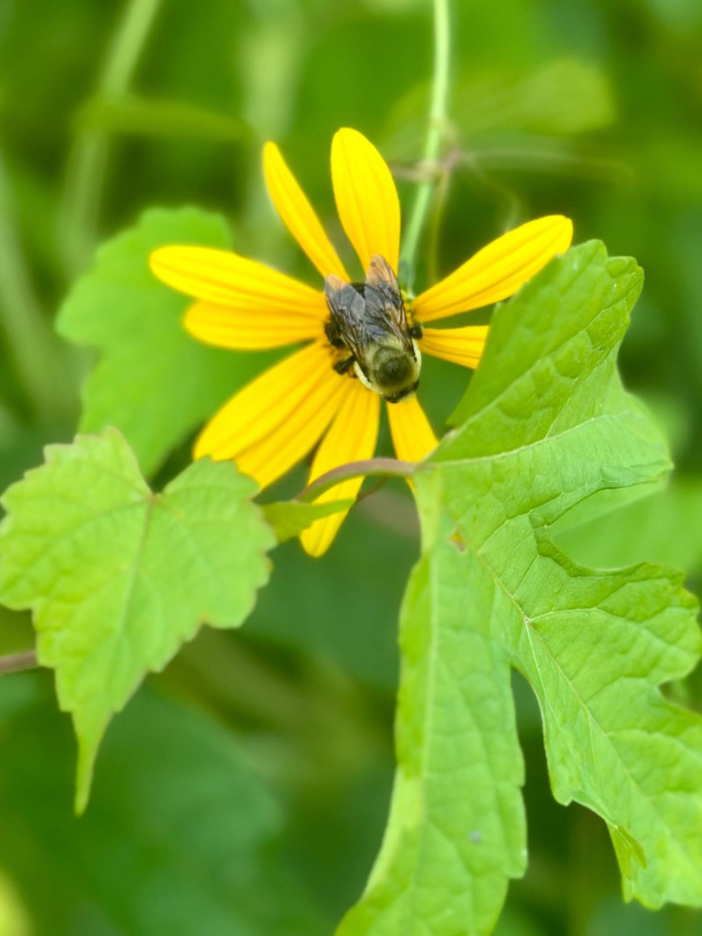
A bumblebee in the 119th Street Pollinator Meadow. Photo by Merritt Birnbaum.
Though the pollinator meadows are particularly beautiful right now in late August, the plants in the meadow are designed to stand year-round, providing both beauty and functionality. Over the fall and winter, standing plants provide food (seeds) and shelter (nesting) for birds; in the spring, native bees lay eggs in the stems.
“We try to really ensure that we have multi-season interest and floral resources for all seasons,” said Kaplan. “Make sure to keep an eye out for fall species that feed pollinators through the fall!”
The meadows also create a more climate-resilient park by helping reduce erosion by holding the soil in place. Many of the Conservancy’s meadows are planted on slopes, where protecting the soil and ground is especially important.