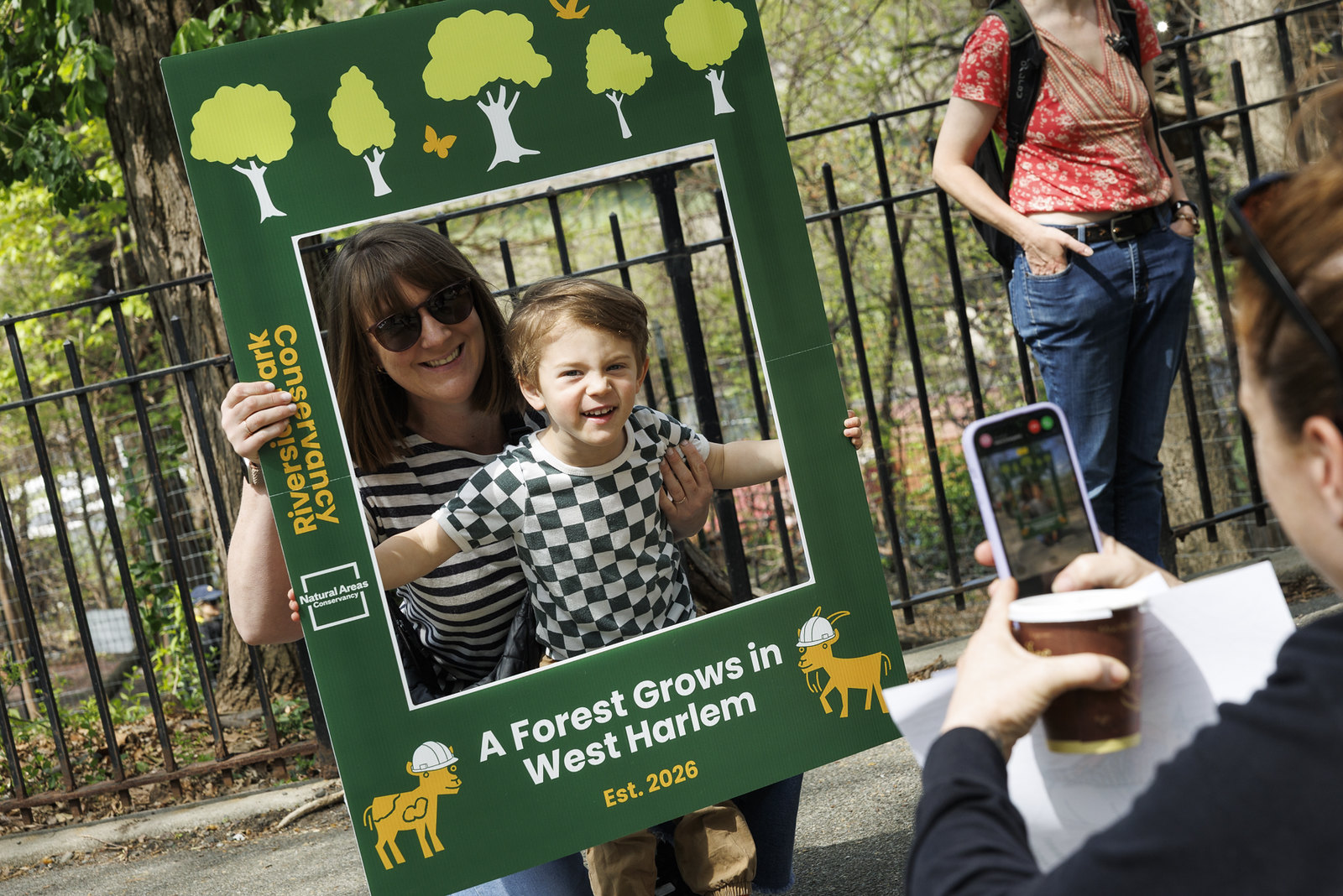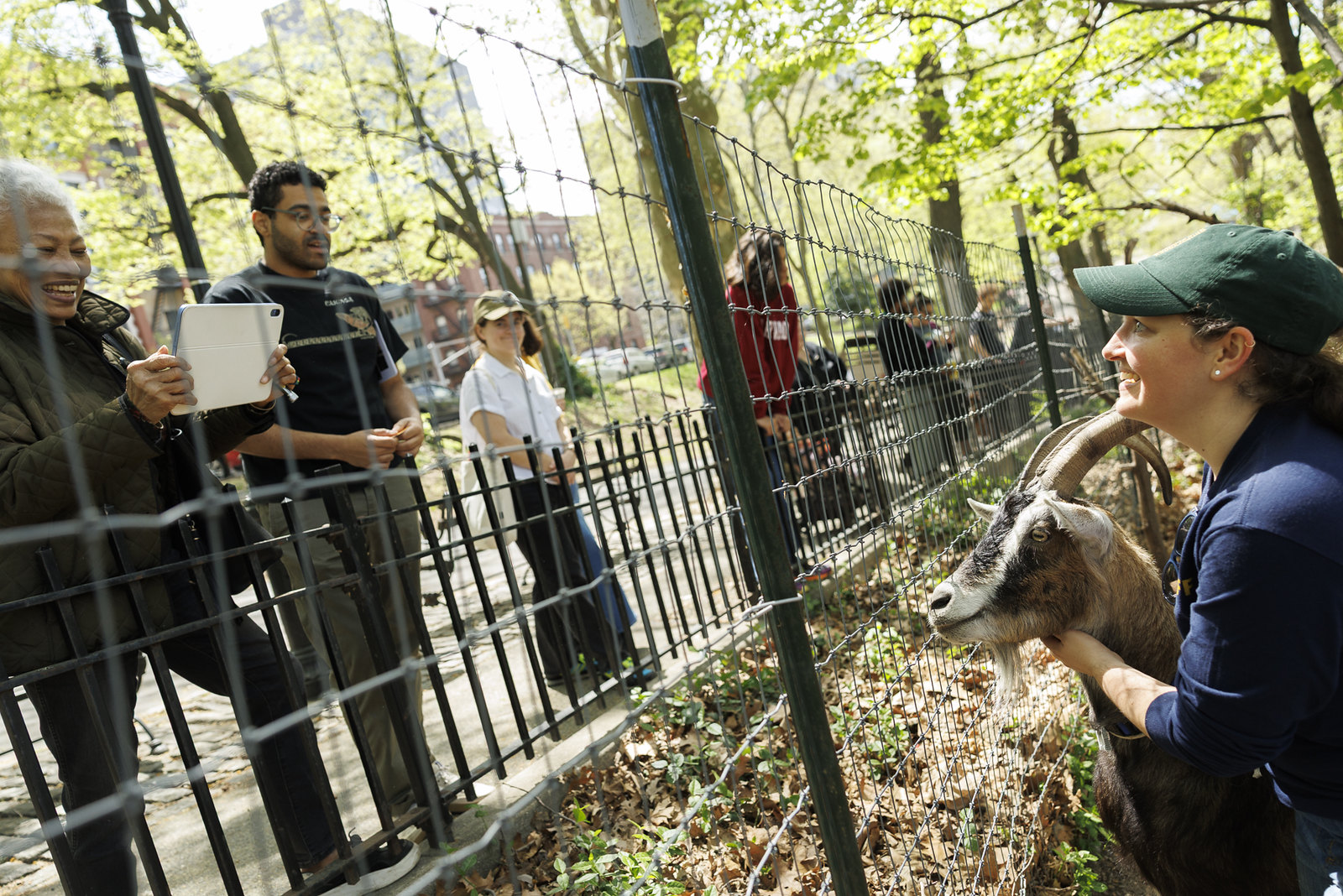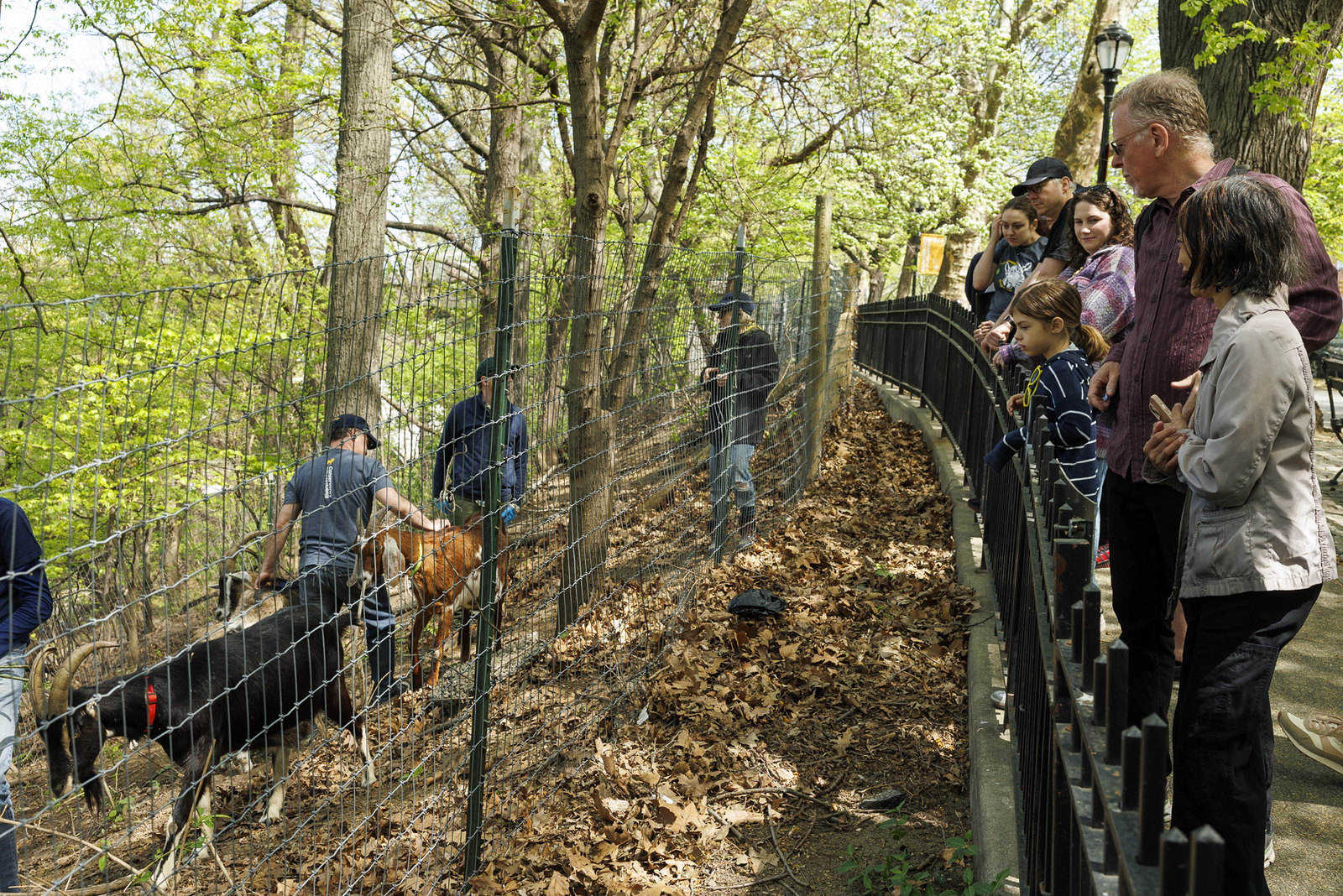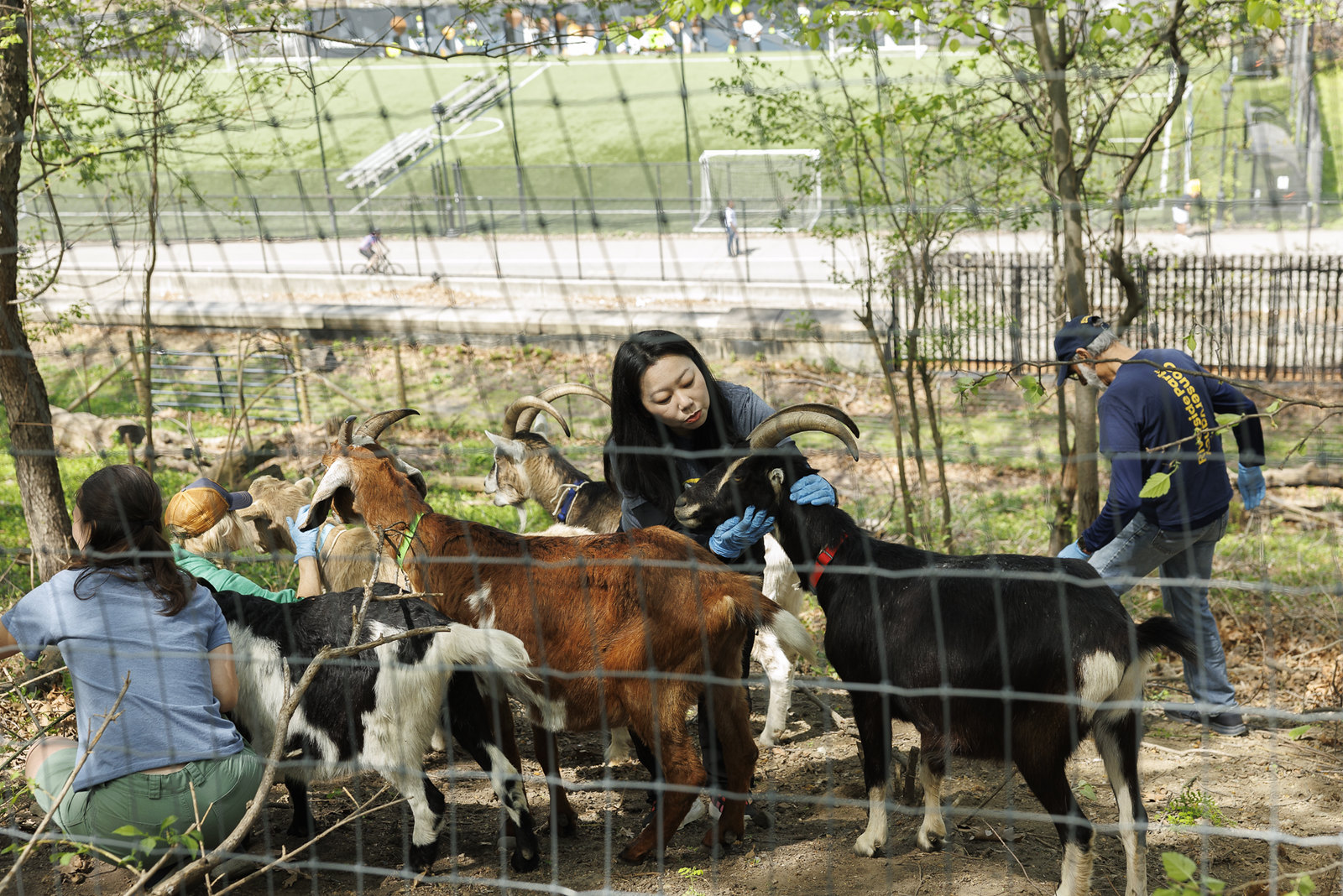


Riverside Park Conservancy, in partnership with NYC Parks and the Natural Areas Conservancy, hosted a community kick-off event on April 18 to celebrate the launch of a $3.25 million forest restoration in West Harlem.
A 7.5-acres forest has quietly grown in West Harlem. Between Riverside Drive and the Amtrak rail line, from W 142 to W 153 Street, the forest’s towering Pin oaks (Quercus palustris) and black cherry trees (Prunus serotina) reflect both nature’s resilience, as they’ve grown without intervention, and vulnerabilities, as an expanding thicket of invasive trees and vines threaten the long-term health of the forest. This restoration will restore ecological balance and foster a vibrant, welcoming public space.
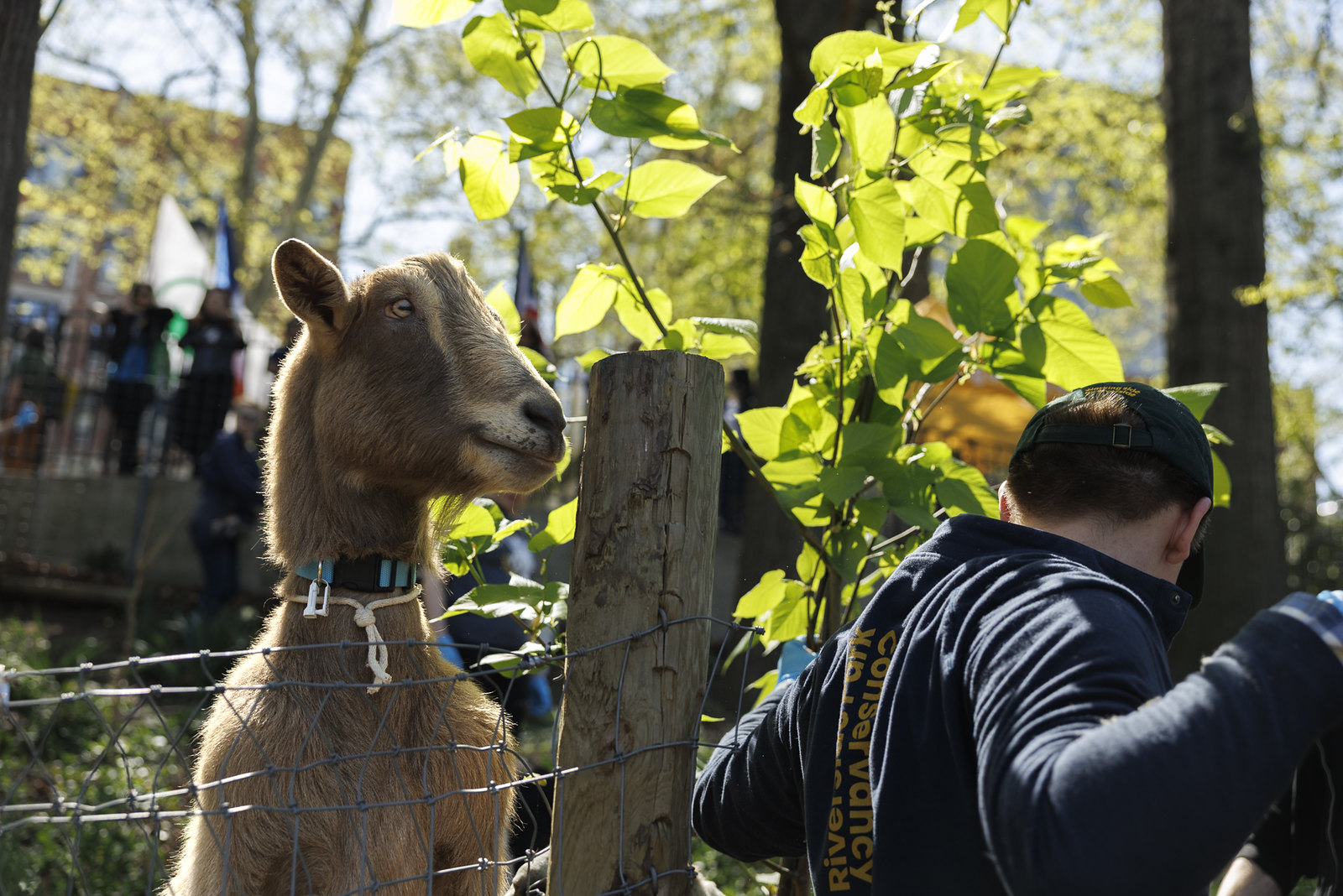
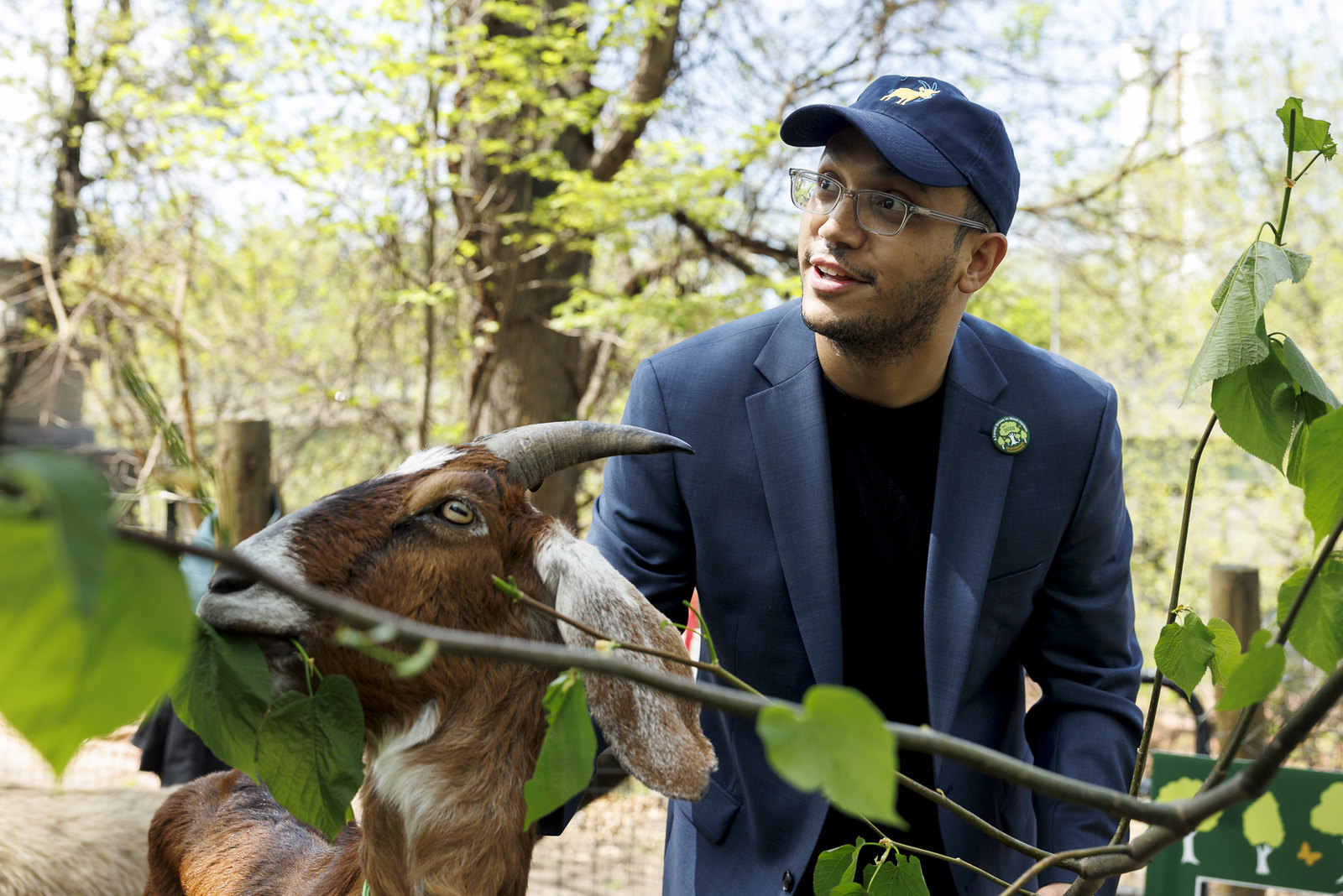
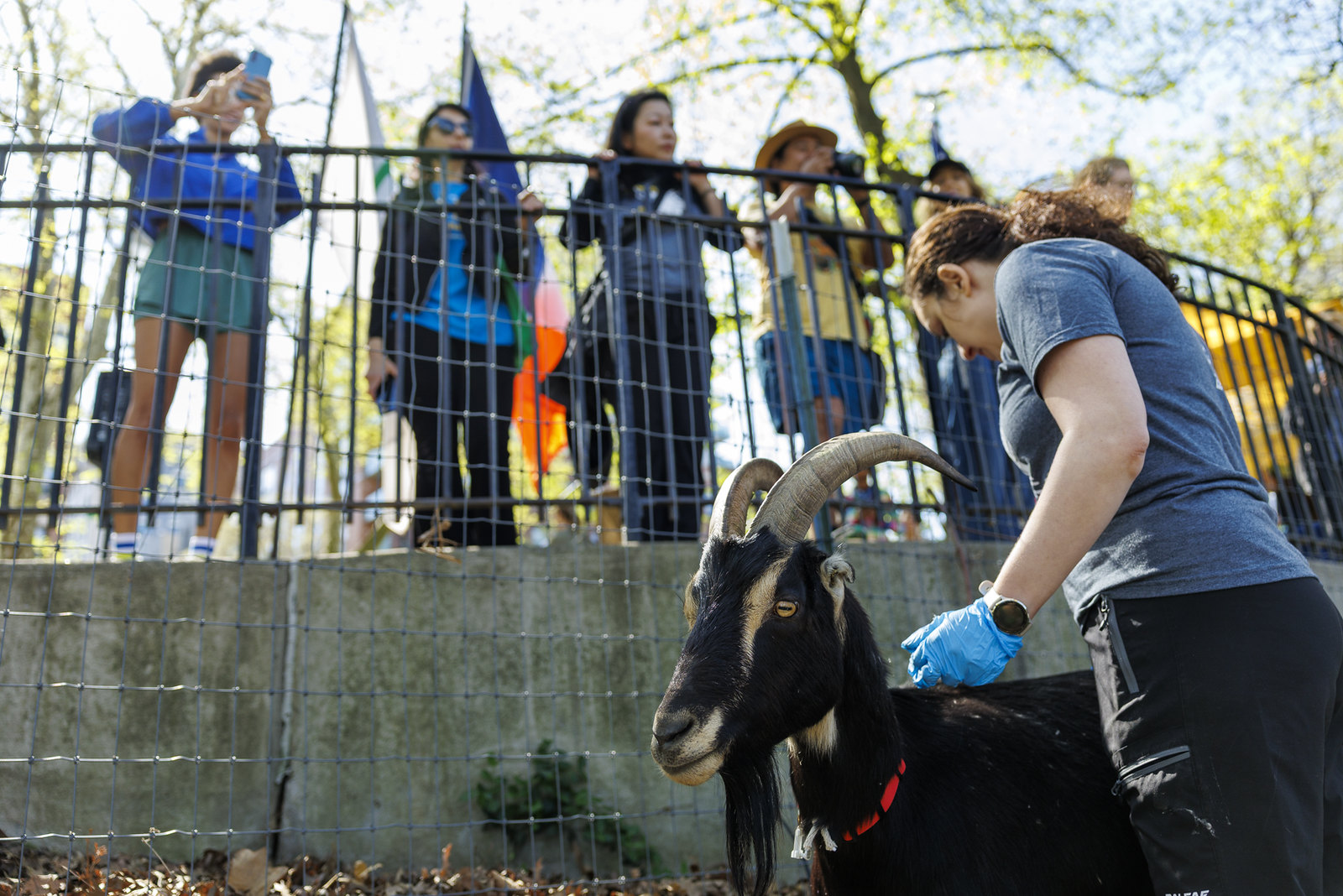
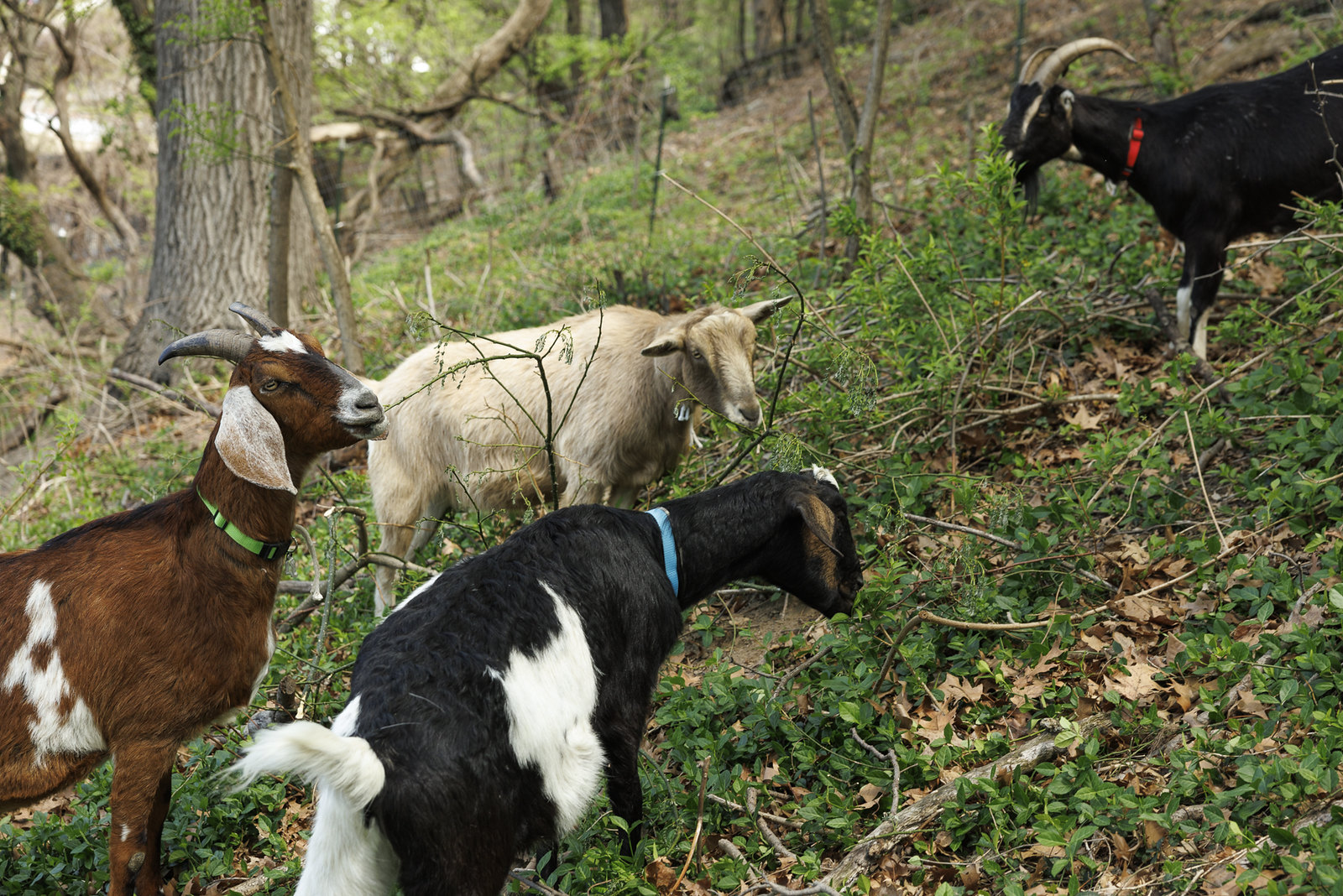
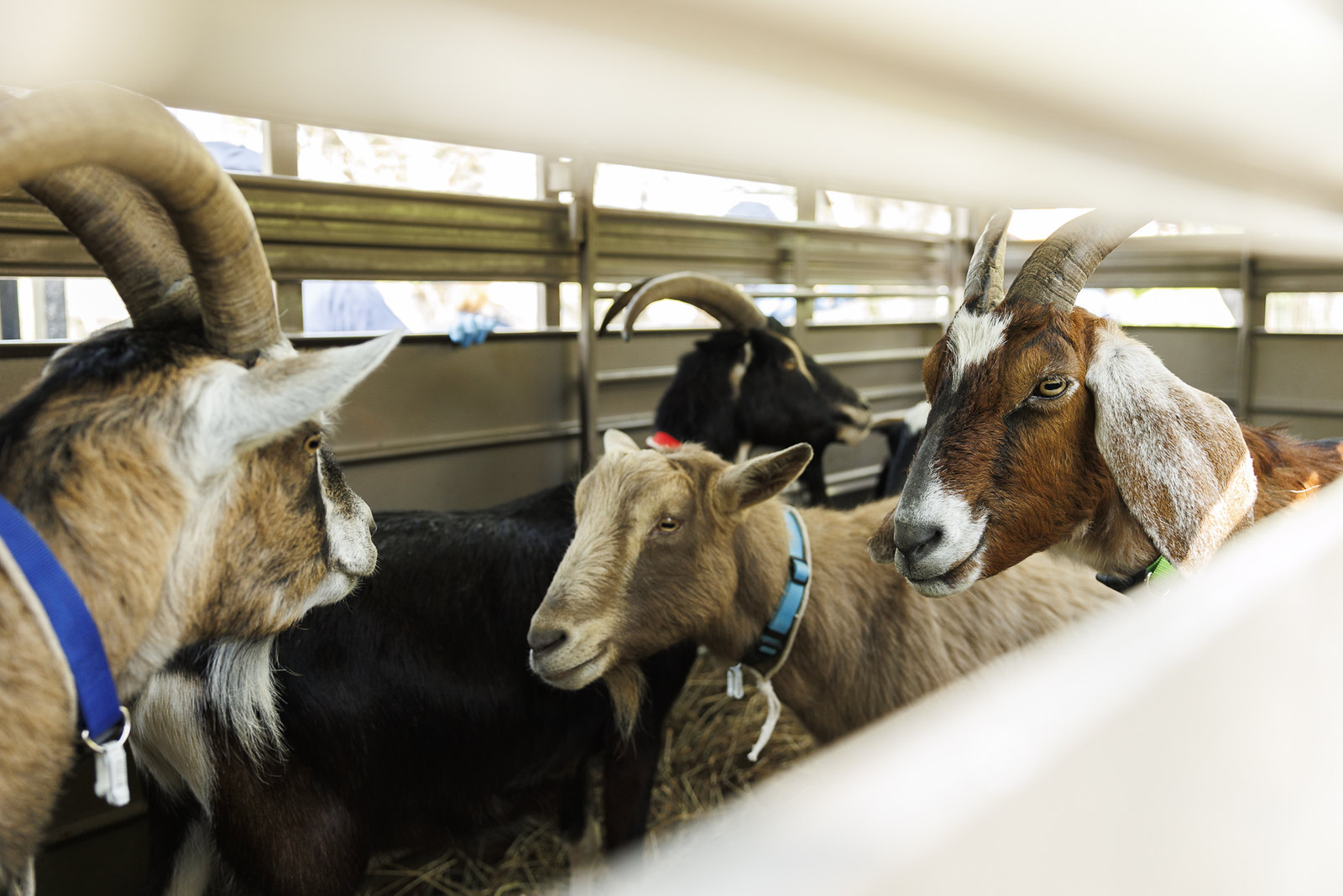
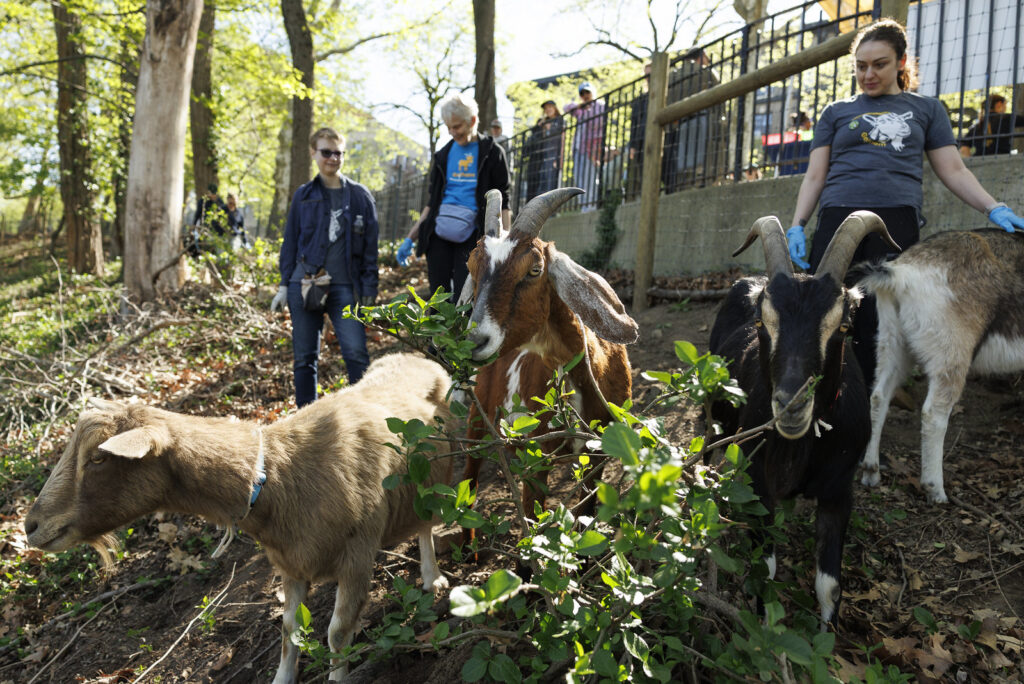
The goats arrived promptly. Just after 9AM, Romeo, Mallomar, Turbo, Chico, and Godiva trotted up a familiar hillside, one which they grazed the past two summers, clearing the way for this restoration to begin. Community members – and our incredible goat volunteers – watched the goats idly nibble Mugort (Artemesia vulgaris) before hearing from the organizations leading this collaborative effort, including Treebed LLC, which awarded the grant to make this restoration possible.
“A Forest Grows in West Harlem is not just a project—it’s a commitment. A commitment to care for this landscape, to restore its health and resilience, and to do so in partnership—with each other, and with the natural systems that have been here long before us”, Merritt Birnbaum, President and CEO of Riverside Park Conservancy said, before reminding us that “a healthy forest is not something we create once. It is something we tend, together, over time.”
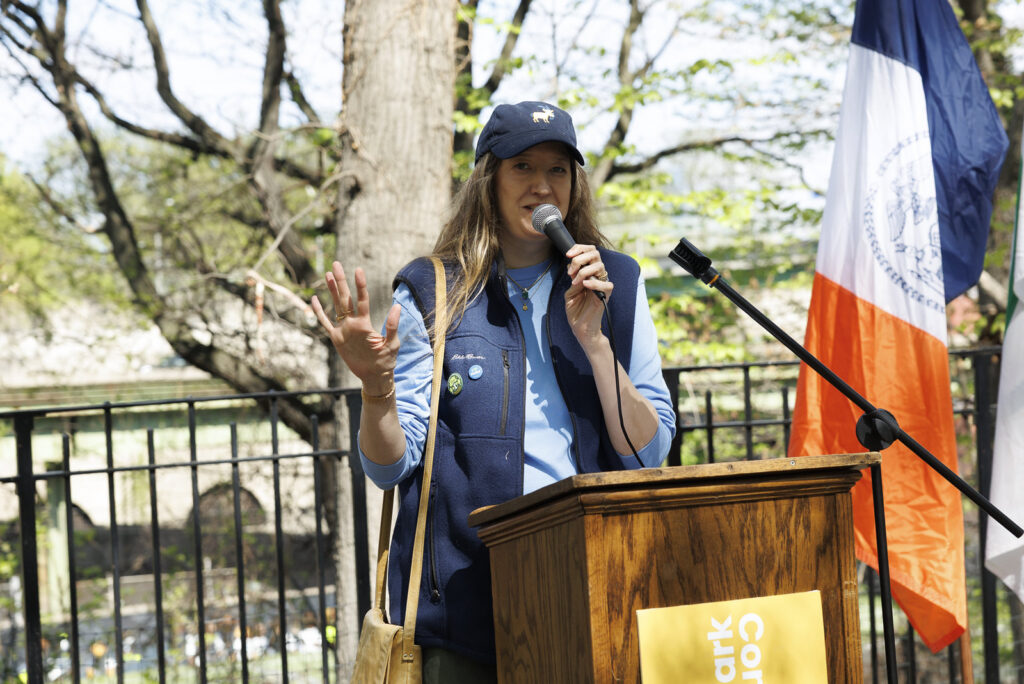
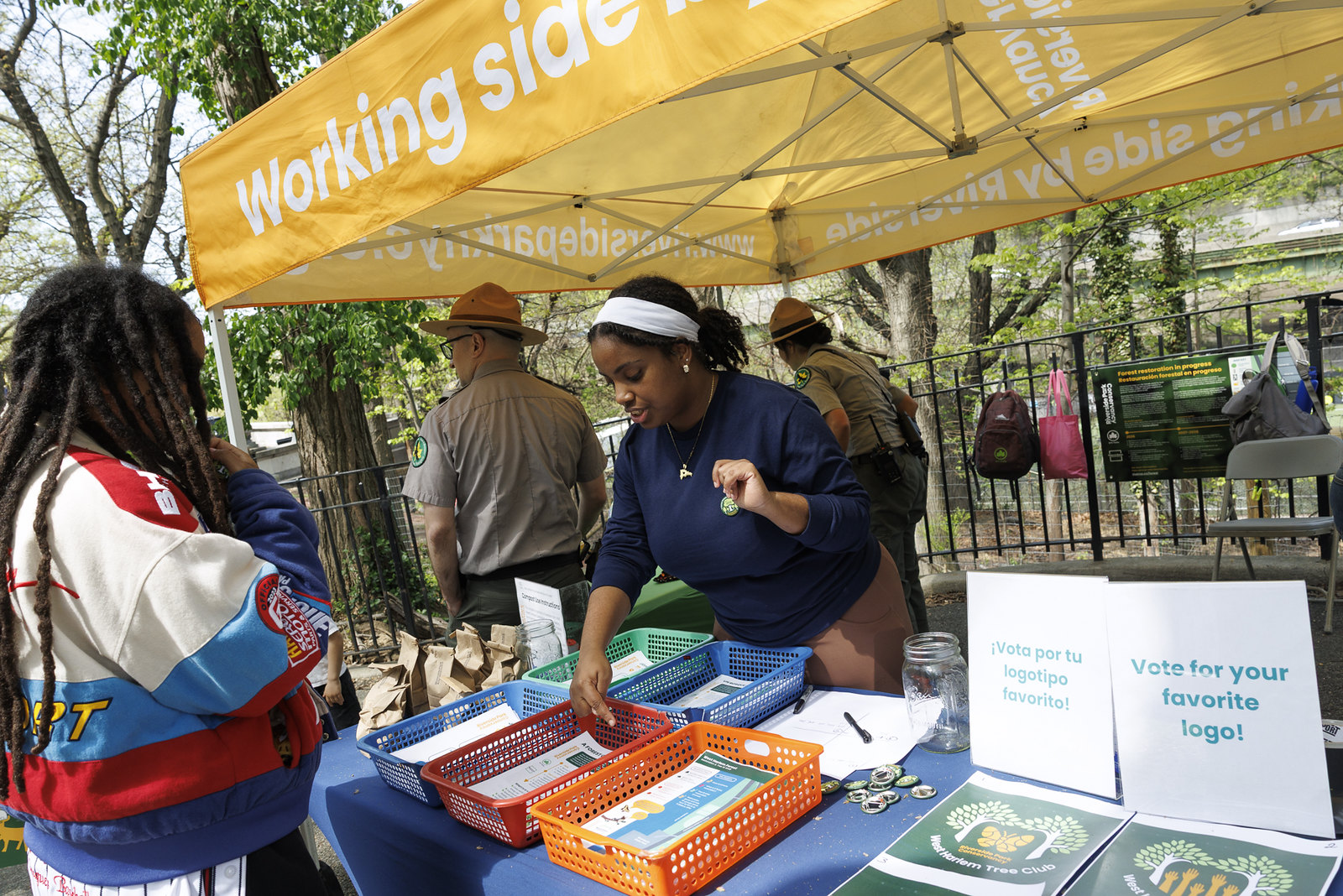
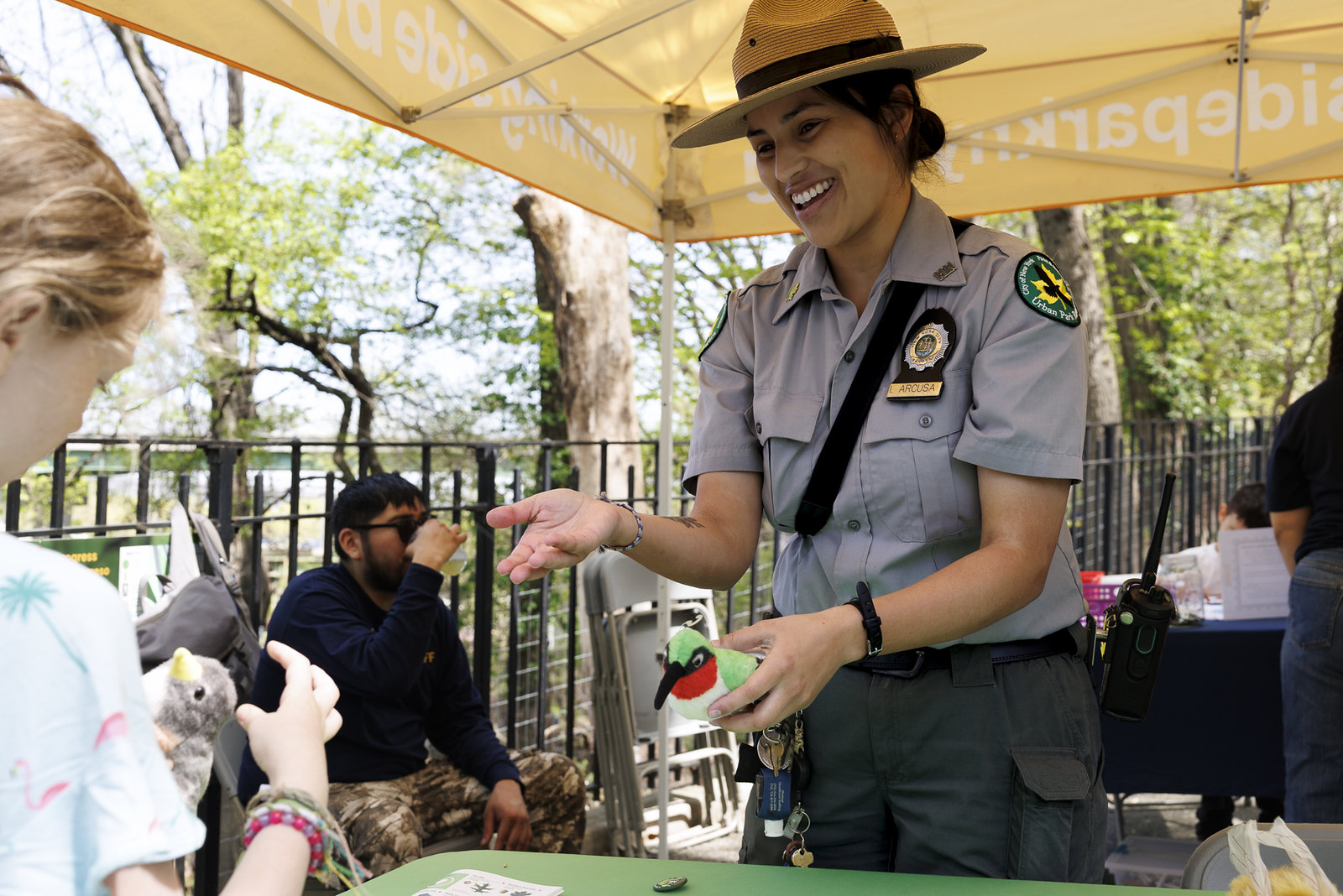
The theme of togetherness wove through all aspects of the event. Community members were invited to join the West Harlem Tree Club to stay up to date on the restoration and become stewards of the forest. Conservation experts from the Natural Areas Conservancy and Riverside Park Conservancy led Tree IDs and forest tours that dove into the restoration process and explored why species diversity is critical to forest health. Kids also got a chance to learn about the native birds that depend on the forest, hold exotic insects, and receive prized “Nature Detective” badges from NYC Parks’ Rangers!
Community members also gathered to write postcards to the forest. Residents imagined what the forest might look like in five, ten years or more, what they were excited to do (picnic with friends) or hear (more bird songs!).
“It’s a simple gesture”, Merritt said, “but it reflects something powerful: that this forest is not just land. It is something we can be in conversation with, something we can love.”
Kathy, a Riverside Park Volunteer told us that she’s “excited for what’s ahead for West Harlem Forest — having spent time volunteering there last summer, I can see the opportunity a thriving, accessible green space will bring for the local community. I look forward to seeing the forest grow!”
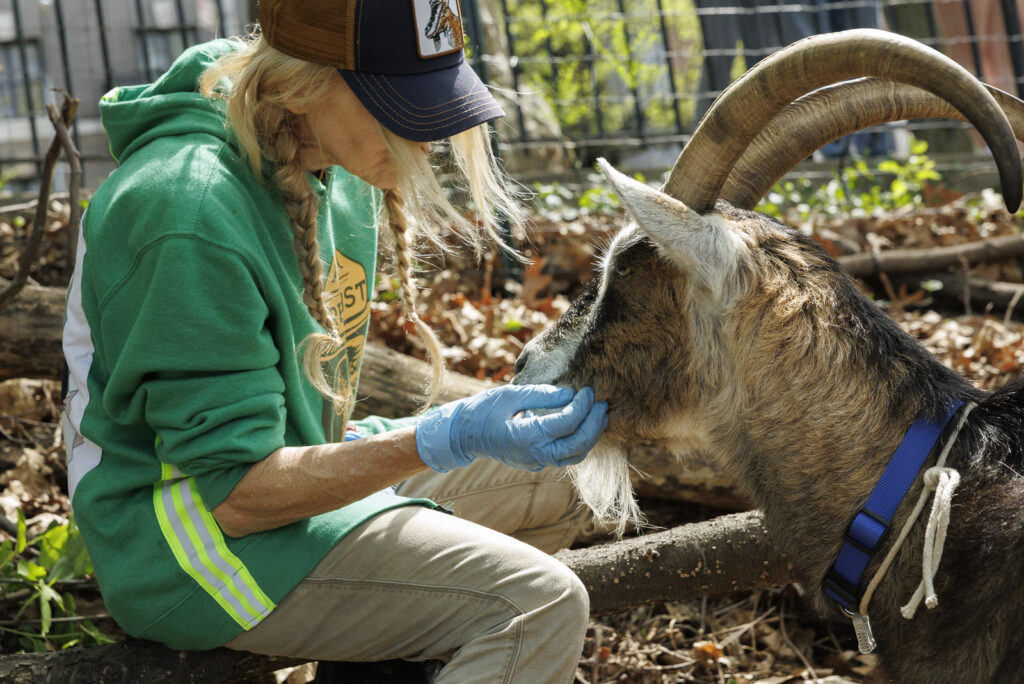
Another reason to love a forest is its capacity to strengthen climate resilience. This is especially critical in underserved communities, such as West Harlem, which has experienced decades of environmental injustice from large, polluting infrastructure projects.
“When we restore forests, we invest in public health, climate resilience, and neighborhood quality of life all at once,” explained Oded Holzinger, Executive Director of the Natural Areas Conservancy.
In summer months, West Harlem is often two to six degrees Fahrenheit hotter than more affluent (and tree-lined) neighborhoods.
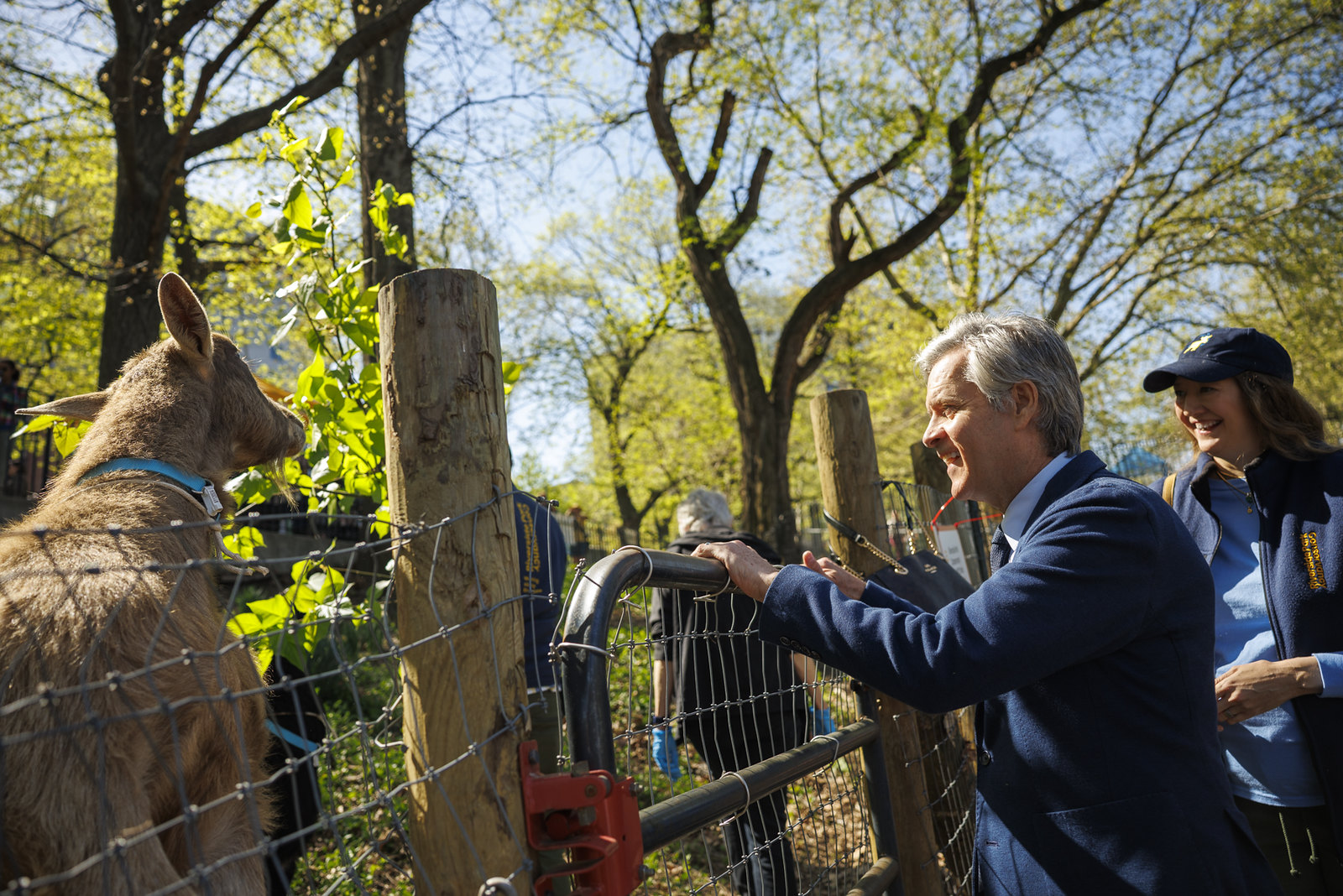
Many West Harlemites also lack air conditioning, explained Manhattan Borough President Brad Hoylman-Sigal, added “as we grapple with climate change and other challenges, including energy costs, we can address these issues through natural reclamation of our forests.”
John Herrold, Riverside Park Administrator for NYC Parks, expanded on this by explaining that trees “cool the air, they clean the air, they save energy, they recycle water, they do so much for us we have to take care of them.”
“West Harlem residents deserve access to a green space that is healthy, well-maintained, and cared for,” said NYC Council Majority Leader Shaun Abreu.
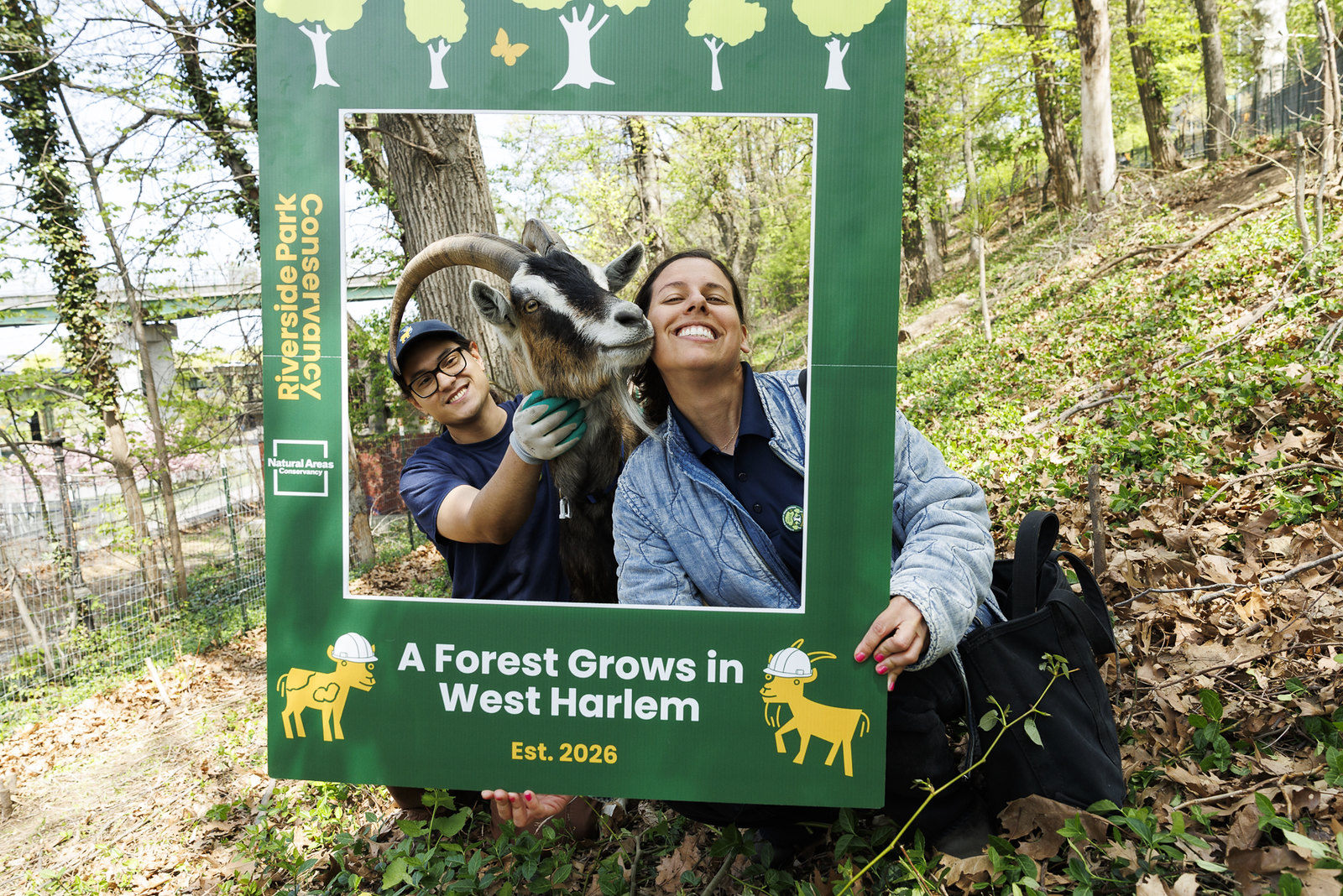
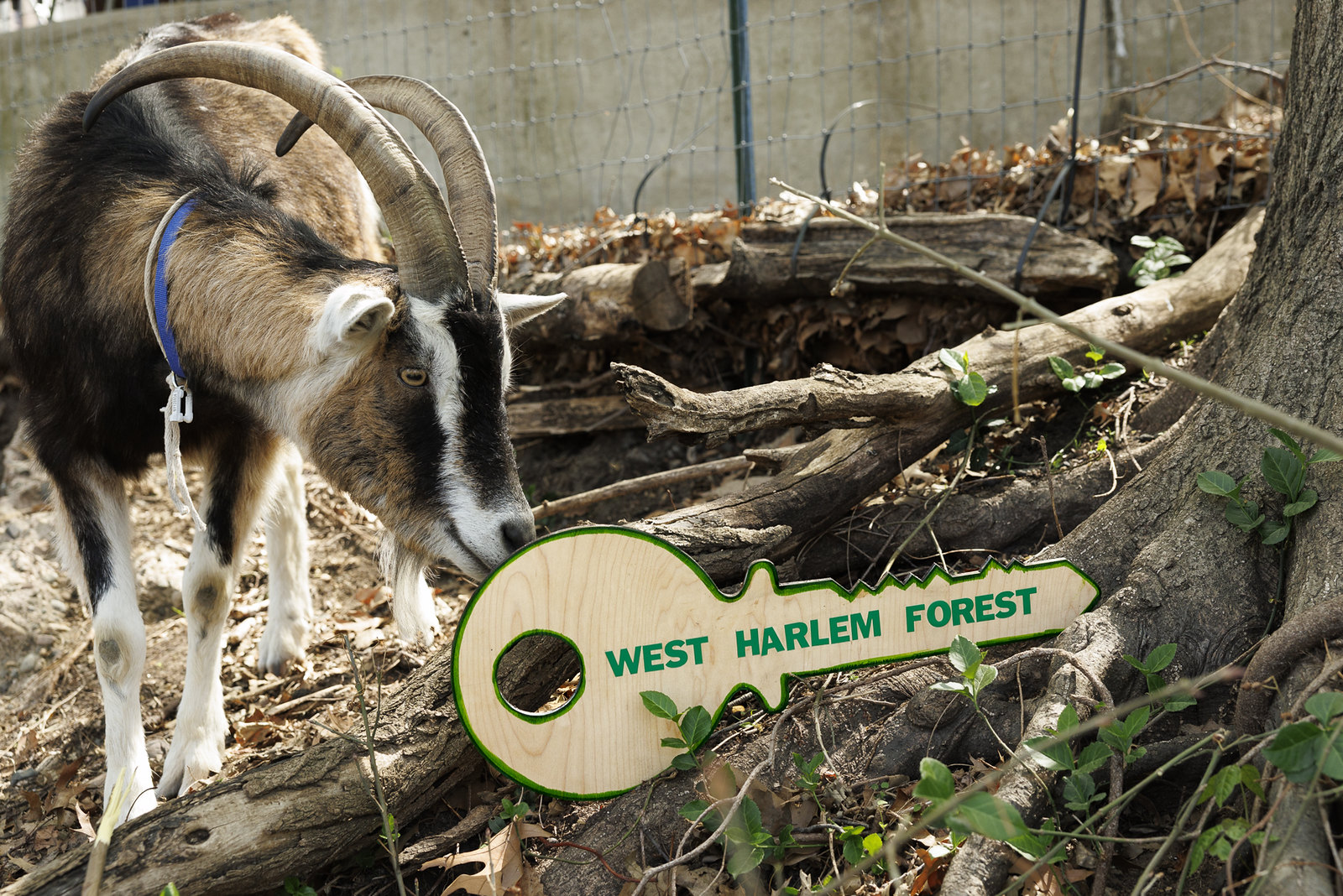
It was on this note of care, that — in a whimsical, yet earnest gesture — we passed a symbolic “key to the forest” from the goats to the humans who will manage the restoration moving forward. As Merritt said, this day was not simply a celebration but a promise, and a commitment to encourage the growth and health of a forest in West Harlem.
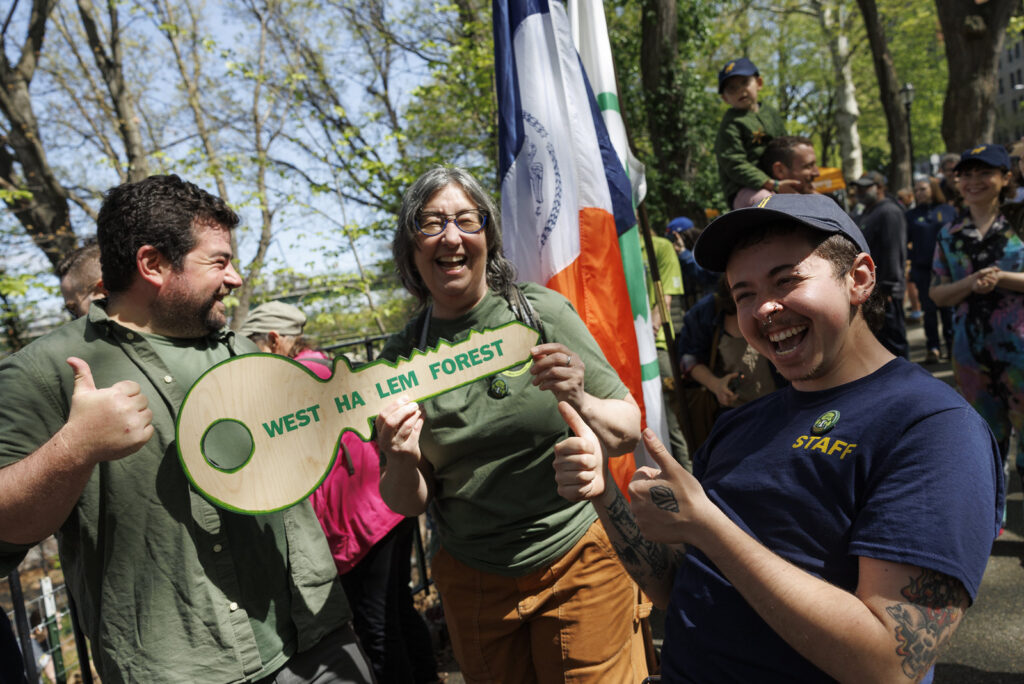
“The West Harlem Kick Off was a fun sneak-peek of what we have to look forward to this summer!” said Heather, a community member and volunteer. She appreciated that the event was one “everyone in my family could enjoy, starting with getting to handle a Vietnamese stick insect to voting for the new West Harlem Tree Club logo, and getting a guided tour of the site.”