



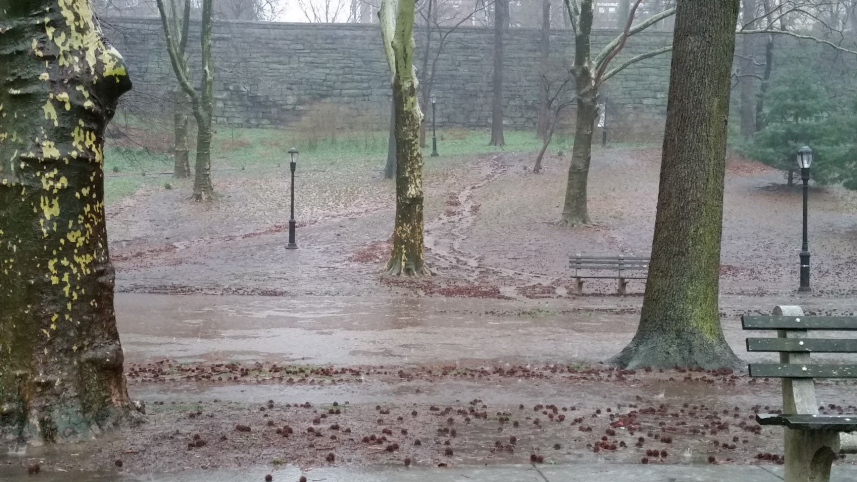
Outdated drainage infrastructure has long been one of the most pressing issues facing Riverside Park. Originally envisioned by famed landscape architect Frederick Law Olmsted and significantly expanded westward in the 1930s under Park Commissioner Robert Moses, the park’s sloping topography was designed to maximize sweeping views of the Hudson River. While this elevation enhances the visitor experience, it also presents complex drainage problems—especially now, as much of the park’s original infrastructure nears the century mark.
Adding to the challenge is the park’s layout. A paved perimeter runs the length of Riverside Park, and during storms, street water flows into the green space at multiple entry points. With increasingly frequent and intense rain events hitting New York City, channeling and appropriately capturing this excess surface water has become even more critical.
In response, NYC Parks—supported by advocacy from Riverside Park Conservancy and engaged members of the local community—secured a total of $26,015,000 in NYC Capital funding to confront the park’s drainage issues head‑on. The first step was a comprehensive study across the entire park. That study laid the groundwork for a targeted design focused on one of the most impacted areas: the promenade between 108th and 116th Streets.
This stretch suffers from persistent standing water, erosion, and overtaxed infrastructure. (See our earlier post on fixing sinkholes for more background.) The design—now in final stages and slated for construction in late 2025—proposes both practical and nature‑based solutions. It includes cleaning and replacing aging drainage systems and introducing new landscape elements to absorb surface water more effectively.
Among these solutions are drainage “swales”: shallow, vegetated channels that guide water away from pathways. The project will also introduce “wet meadows” in key locations known for frequent flooding after heavy rain. These new landscape elements will feature a permeable drainage layer beneath a gentle swale, topped with native grasses and perennials well‑suited to wet, shifting conditions.
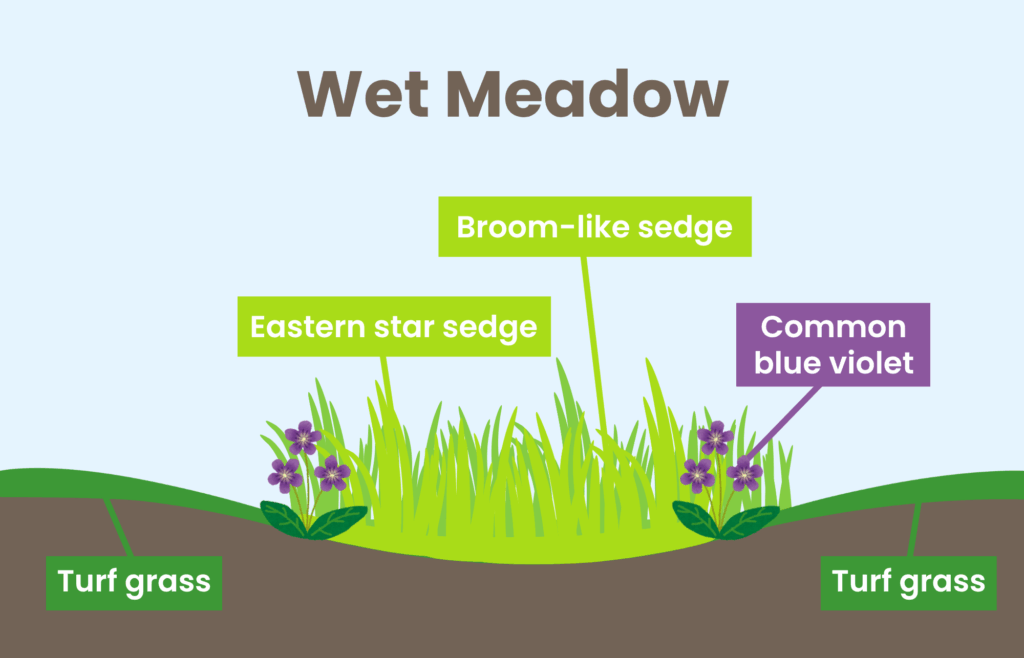
Together, these areas will create ecologically rich habitats. The wet meadows are designed not only to manage water but to support pollinators, small mammals, and beneficial insects—building a more vibrant and resilient ecosystem in the heart of the West Side.
Riverside Park’s drainage improvements mark an important step toward sustainable park management, ensuring that this beloved urban green space can thrive for generations to come—rain or shine.
Construction is slated to begin in late October and run through April 2027, during which time park users can expect significant disruption and closures inside the park in this area. You can stay up to date via the NYC Parks capital project tracker, and the Conservancy’s website, where we will post regular updates on the progress.