



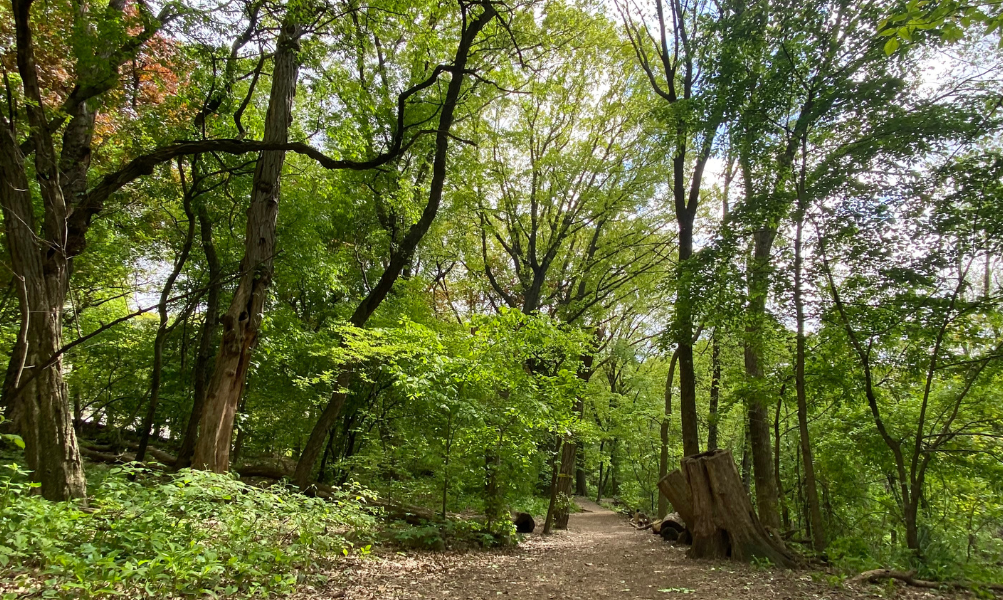
After months of preparation in partnership with NYC Parks and the Natural Areas Conservancy, on-the-ground restoration work in the West Harlem Forest will begin in late November.
This work follows an initial clearing of invasive species of vines and shrubs accomplished by the Riverside Park goats), a tree survey of the forest, permitting requirements, and a host of community outreach and volunteer events. This coming phase involves removing fast-growing invasive vines, shrubs and trees to prepare the site for 2,250 native trees that will be planted in the coming seasons. What is now a woodland in ecological decline will soon be a welcoming, ecologically diverse and resilient urban forest in West Harlem.
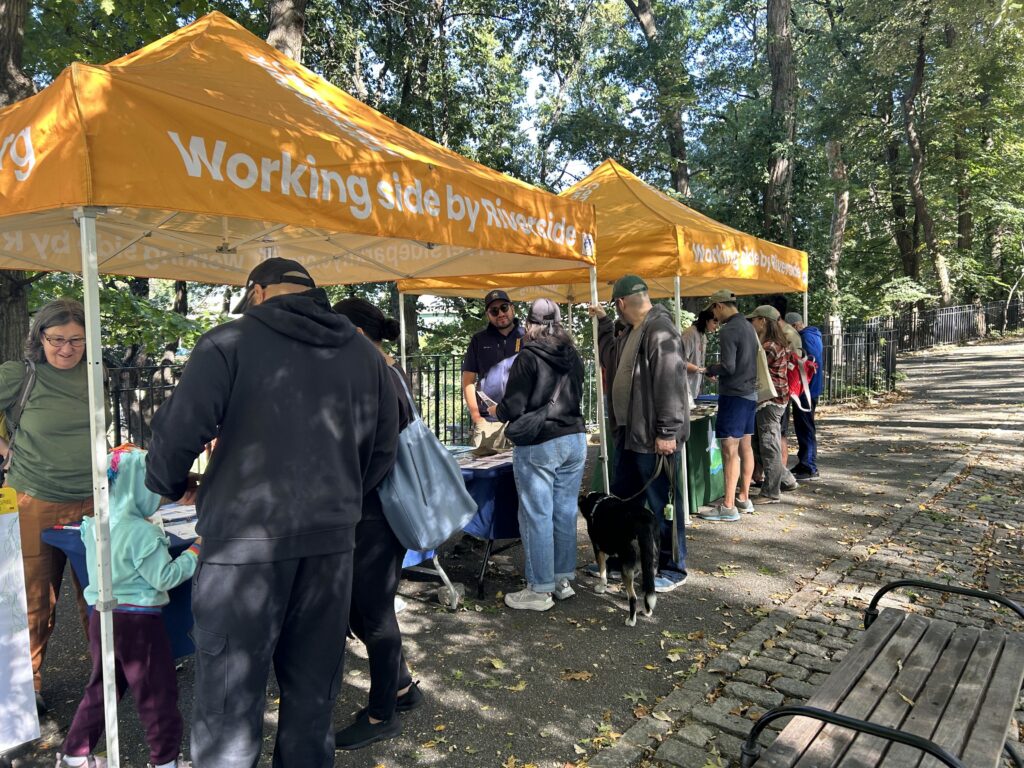
Our tree survey of the West Harlem Forest, which spans from West 143rd to West 153rd Street along Riverside Drive, includes 477 trees over six inches in diameter.
Fifty-seven percent of these trees, however, are fast-growing invasive species including Norway maples, black locusts, and tree of heaven. These species leaf out earlier than native trees and can impede the growth of native species by altering soil chemistry. They provide fewer ecological benefits compared to native trees, hamper biodiversity, and reduce soil stability. By removing hundreds of mid-size invasive trees, we are making room for the next generation of native trees to inherit the forest.
All requisite permitting for tree and debris removals has been approved by NYC Parks. The scheduled tree removals are supported by NYC Parks’ Natural Resources Group and the Manhattan’s Forestry under the condition that we plant a requisite number, and size, of trees. These calculations are based on the Department’s Tree Valuation Protocol. Using this protocol, arborists evaluate and score trees based on their condition rating, species and location. A tree’s valuation determines its replacement value.
Alongside invasive plant species, we will also remove large debris from the site that has accumulated over the past few decades due to illegal dumping. Our incredible West Harlem Forest Club has already started this work, alongside our West Harlem Forest Technician and Outreach Coordinator.
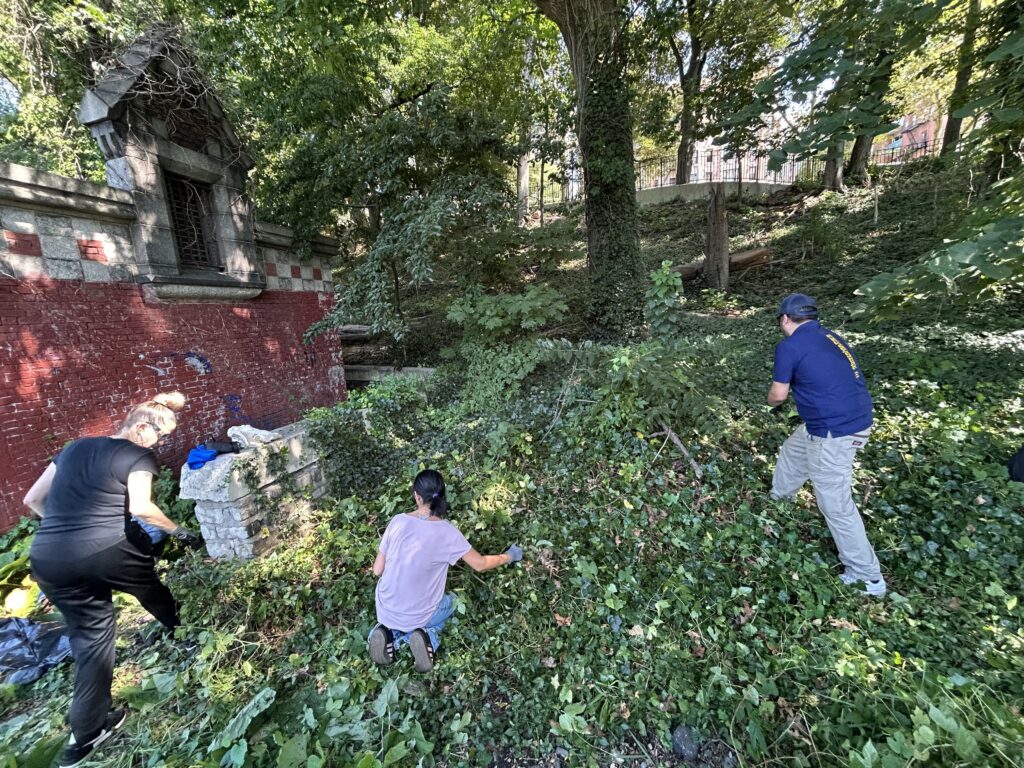
Once large debris is cleared, contractors will fell invasive trees approved for removal.
Felled tree stumps will be treated through a precise method that prevents future growth without impairing nearby healthy native plant species. Felled trees will be used as erosion control in the forest. Fast-growing invasive vines, which can girdle or block healthy trees from receiving adequate sunlight, will also be removed during this phase. We have also identified a number of trees that will be pruned to promote beneficial growth. Chainsaws, brush cutters and powered winches will be used to accomplish these tasks.
These tree and vine removals are a significant step forward for this forest restoration. The site will soon be ready to accommodate thousands of new hickories, oaks, and dogwood trees. As these trees grow, air quality will improve, bird songs will increase, and a forest will be revived.