


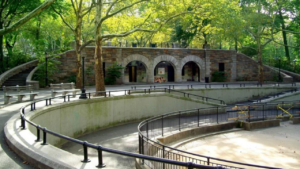

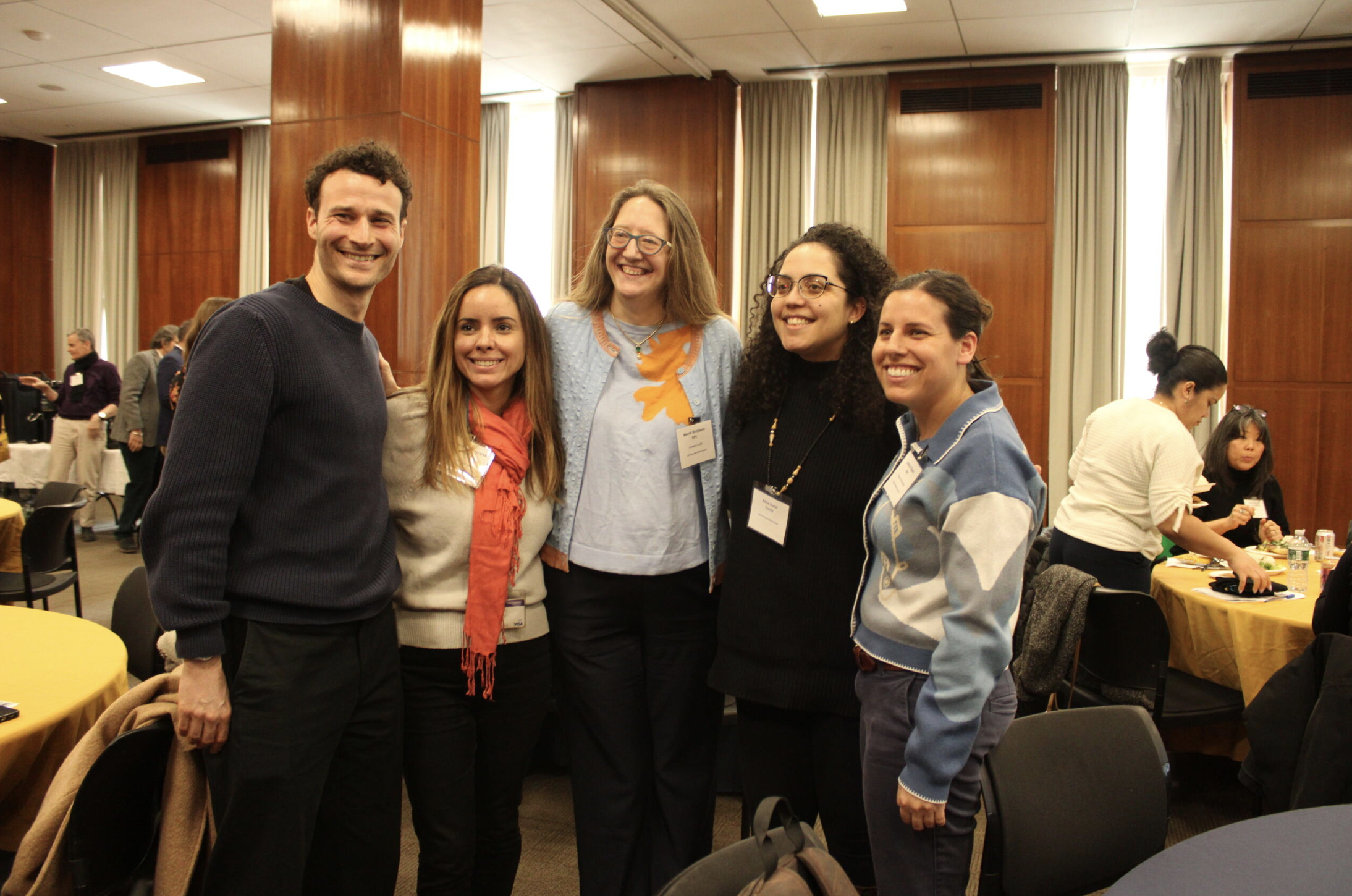
On March 13, 2026, Riverside Park Conservancy hosted its second annual Riverside Partner Summit, bringing together over 100 community leaders, volunteers, and organizations in a lively, collaborative setting. Once again sports leagues, youth programs, arts groups, environmental advocates, and neighborhood organizations gathered alongside historians, educators, horticulturalists, and elected officials to share ideas, celebrate successes, and learn from one another in thoughtfully curated breakout sessions and panel discussions.
This year’s theme for the day: sharing and shaping a resilient future for Riverside Park and all who love it.
Building on last year’s inaugural Summit, every element of this year’s gathering fostered connection, shared learning, and collaboration across the Riverside Park community. We hope the Summit continues to grow as an annual celebration of the people, ideas, and projects that make our parks work.
Roots to Renewal: Celebrating Four Decades of the Conservancy
The Summit kicked off with a warm welcome from New York City Council Member Gale Brewer, who reminded attendees of the deep connections people have with Riverside Park. “When you go there [Riverside Park Conservancy], literally people remember growing up in your park… It’s a really special place from top to bottom,” she said, capturing the significance and enduring impact of the Park on generations of New Yorkers.
Following Council Member Brewer’s opening, Merritt Birnbaum, President & CEO of Riverside Park Conservancy, and John Herrold, Riverside Park Administrator for NYC Parks and Senior Advisor to the Conservancy, presented an insider’s look at the Park in 2025 and where it’s heading in 2026. Reflecting on the Conservancy’s 40-year journey, Merritt shared her excitement of convening with a group dedicated to the Park and its community.
“It’s so wonderful to be in a room with people who are sparkling just thinking about our park and our community and the work that we can do together,” said Merritt Birnbaum. “Let’s focus locally and on what we can do. I always come back to the idea that the park, and the work we do, can bring joy, can bring rest, and can bring connection. Being in the room for this conversation is part of that.”
Their presentation highlighted how the Conservancy and NYC Parks continue to have a strong, collaborative partnership balancing nimble, community-driven initiatives with the large-scale infrastructure projects that only government can make possible. Participants also learned about key findings from the 2025 user surveys, which provide valuable insight into how the Park is experienced and what matters most to visitors:
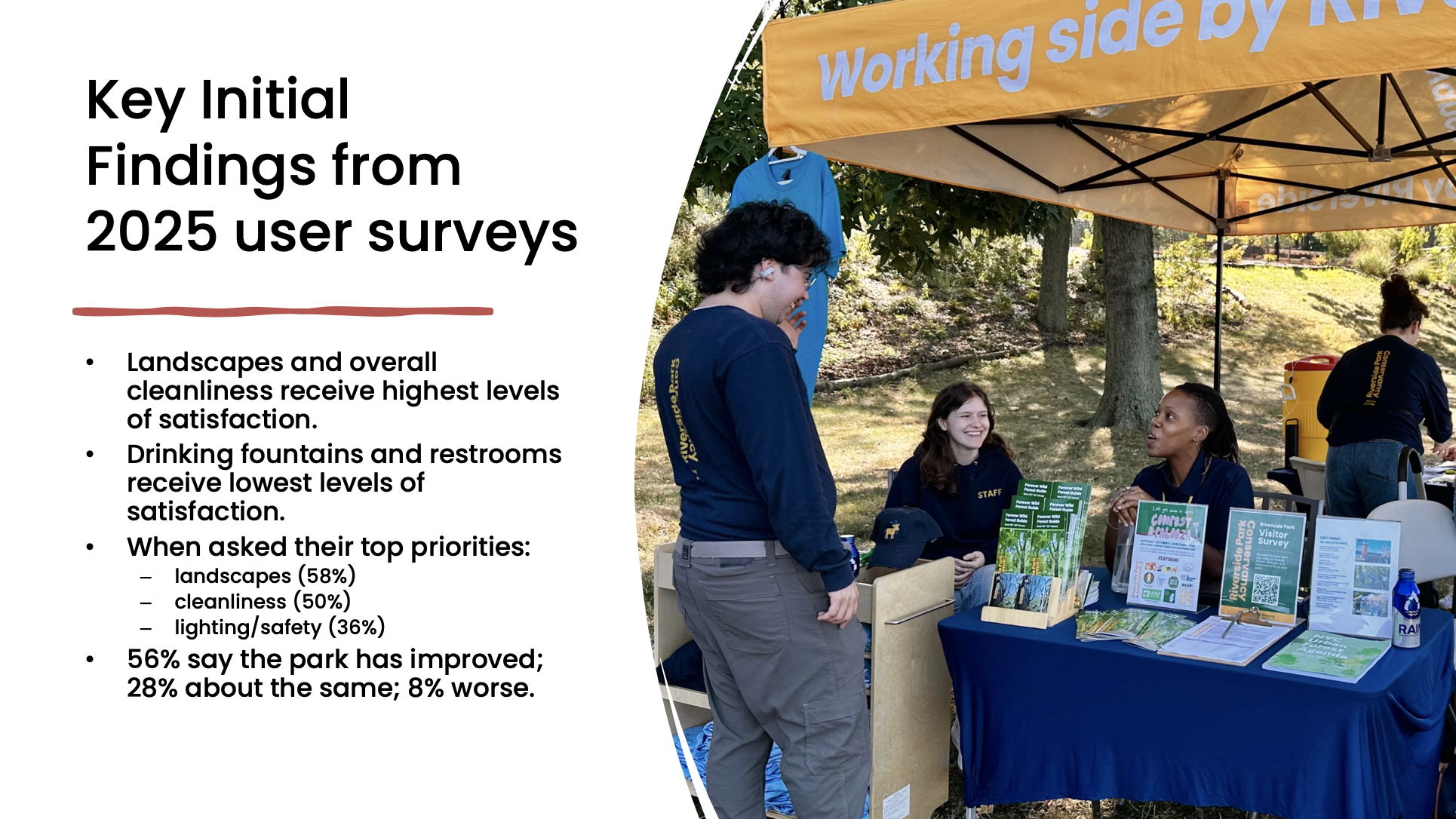
These insights help guide the Conservancy’s work and inform strategic decisions, ensuring that resources and programs meet the needs of all who use and love Riverside Park. Birnbaum also walked through some recently completed projects and new initiatives, including:
- A Special Services Crew dedicated to small-scale repairs, erosion control measures, and other maintenance projects throughout the Park
- A fully solar-powered info and visitor center, the first of its kind in Riverside Park, which will see expanded hours in 2026, as it merges with the operations of Riverside Tennis at 96th Street
- Increased volunteer-supported amenities, including a temporary bathroom near the sports courts at 110th Street, providing much-needed access in this high-traffic area
- West Harlem forest restoration project, a 3-year partnership to restore the natural areas of Hamilton Heights and create a long-term forest are plan
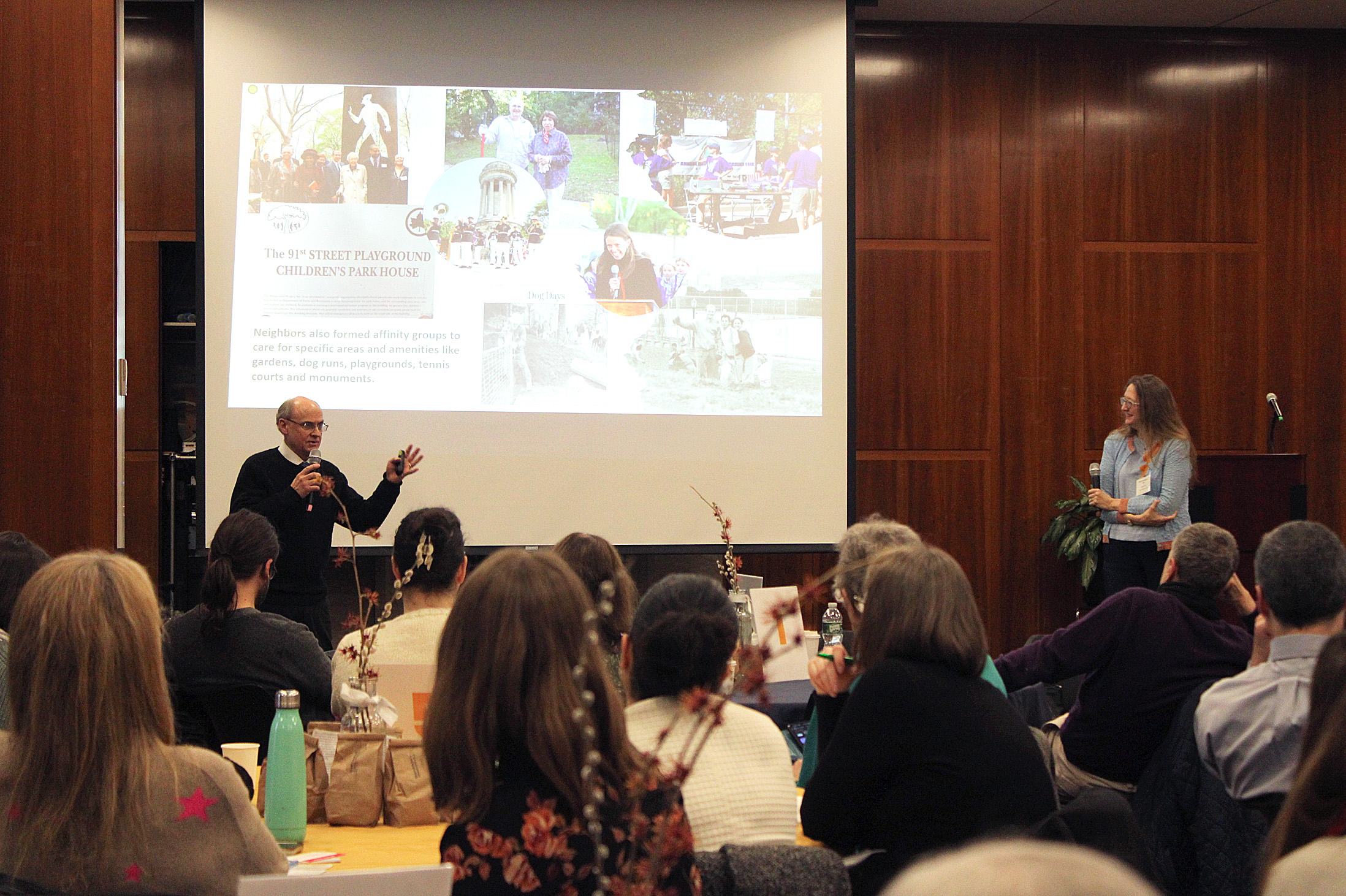
Herrold delivered exciting updates on progress with nearly $1 billion in capital projects currently awarded or underway in Riverside Park, including:
- A major effort to improve drainage and reduce flooding between 108th and 116th Streets using a combination of improved drain infrastructure and new wet meadows.
- Ongoing structural repair work by DOT engineers within the Amtrak train tunnel that will stabilize and enable restoration of the promenade
- The historic restoration of the Soldiers’ & Sailors’ Memorial and Plaza, which will allow for the reopening of the monument’s interior to the public, along with ADA access
- The detailed historic reconstruction of the 79th Street Rotunda, which will include a new state-of-the-art restaurant space, full restoration of the Guastavino tiled arches and central fountain
Breakout Sessions at the Summit
This year’s Summit featured breakout sessions, giving participants the chance to dive deeply into specific topics in smaller, interactive groups. These focused discussions created space for exchanging ideas, learning practical strategies, and connecting with peers who share a passion for Riverside Park and the communities it serves. The morning sessions included:
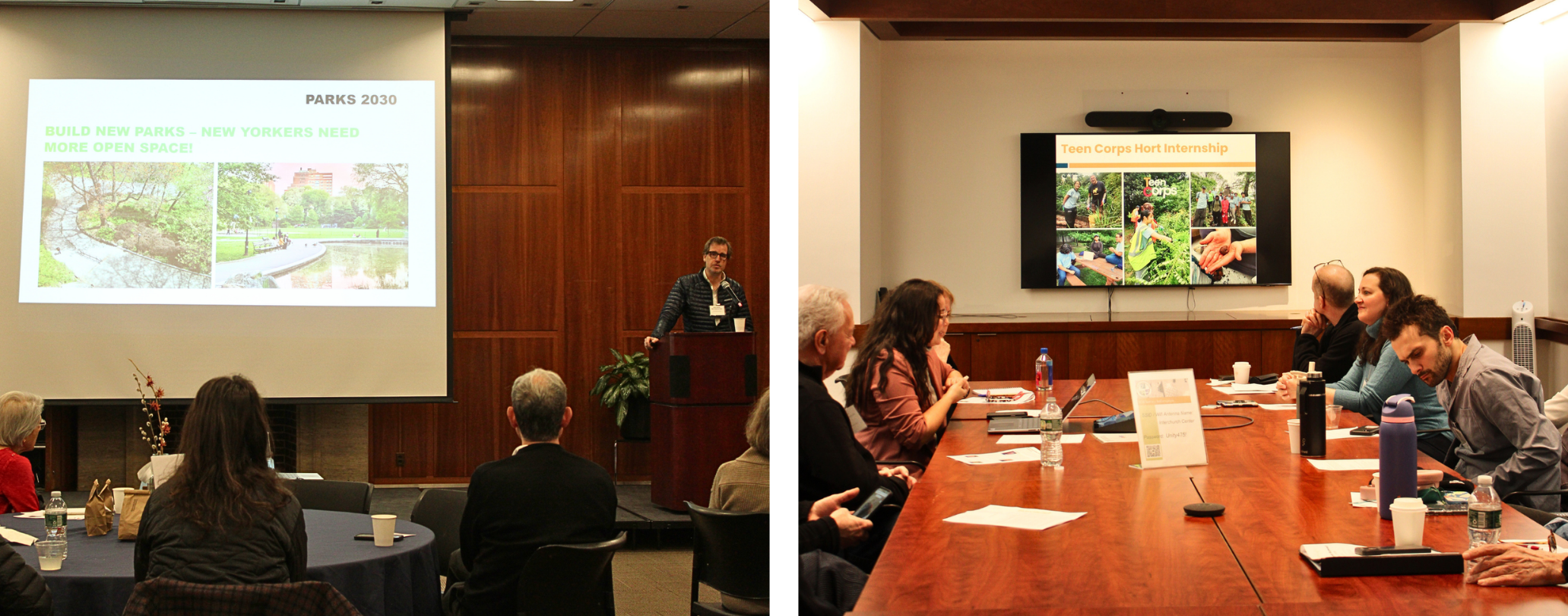
Parks 2030: A Roadmap for Advocating for our Green Spaces
Led by Adam Ganser, Executive Director of New Yorkers for Parks, this presentation and Q&A explored the urgent challenges facing parks across New York City, from chronic underfunding to climate resilience and equitable access. Using Riverside Park as a local example, Ganser highlighted how neighborhood stewardship connects to citywide policy priorities and how participants can become advocates for their green spaces. Participants were encouraged to sign the Parks 2030 petition and access resources on the New Yorkers for Parks website.
Building Community Through Volunteerism
This interactive panel, led by Riverside Park Conservancy’s Volunteer Initiative Team — Kristen Meade, Stephanie Ashley Caban, Ryan Schulte, and Lisa Shore — explored how to create “third spaces” where volunteers feel connected to their communities. The session examined practical ways to engage volunteers, share successes and challenges, and strengthen the human networks that sustain our parks. Participants left with concrete ideas for fostering meaningful volunteer experiences that benefit both people and natural spaces.
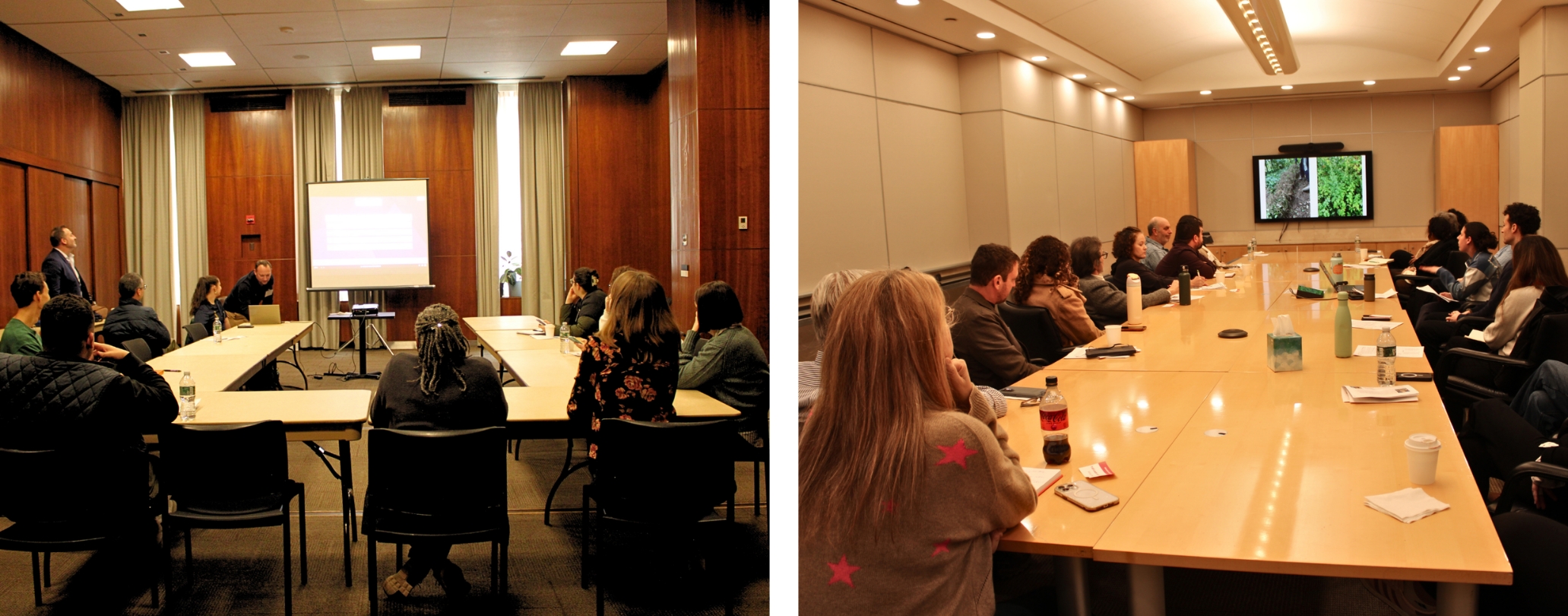
Meeting Kids Where They Are: Strategies for Engaging Youth in Programming
In this roundtable discussion, Hayley Tessler, Field Research & Partnerships Coordinator at Riverside Park Conservancy, joined Mike and Brian Handell of Kids of Summer to tackle the challenges of engaging youth in programming. From sports camps to educational opportunities, the discussion highlighted strategies for meeting young people where they are by balancing school, extracurriculars, and screen time, while cultivating curiosity, skills, and a lasting connection to the Park.
It All Leads to the River: Protecting the Hudson with Green Infrastructure
Jessica Kaplan, Director of Horticulture, and Harrison Nesbit, Director of Sustainability, guided participants through a time-spanning exploration of Riverside and Fort Washington Parks, from pre-colonial landscapes to the challenges of climate change today. Using water as a lens, they illustrated how urban development and environmental shifts have shaped the Park and how thoughtful green infrastructure can create a more resilient future. Participants left with both a sense of history and practical insights into sustaining the Park’s ecosystems.
By guiding dialogue, these discussions gave participants practical ideas to bring back to their organizations and put into action in their communities.
Standing up for Parks
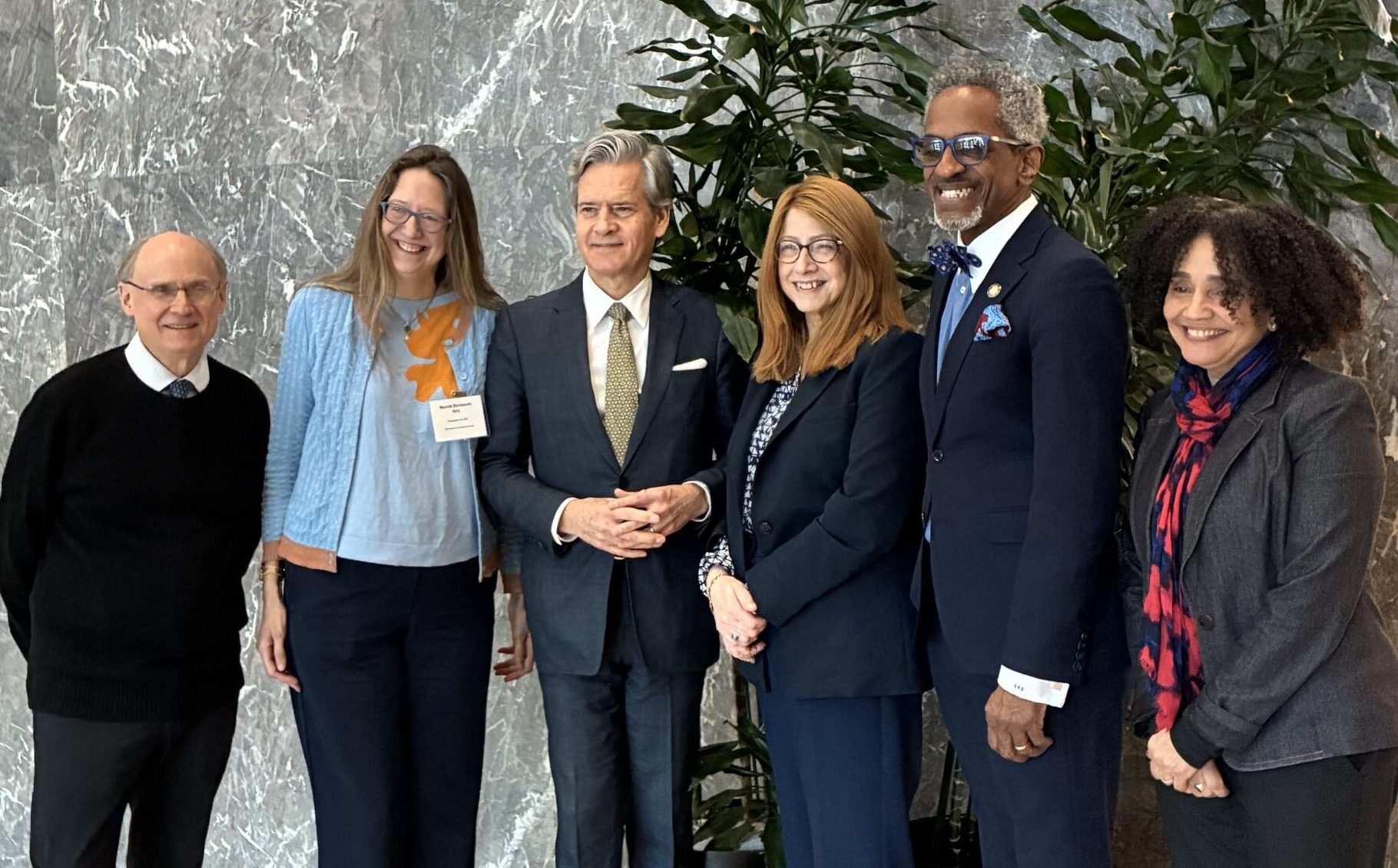
After the breakout sessions, attendees turned their attention to the vital role of public parks as “third spaces” and how we can all support them
Manhattan Borough President Brad Hoylman-Sigal spoke, thanking attendees for their dedication to Riverside Park and the surrounding communities. He reflected on the many ways the Park supports New Yorkers by offering space for recreation, reflection, and connection, underscoring the importance of investment in these essential public spaces.
“Government officials can’t do it alone, and with budget cuts on the horizon — something that has always been in the background of our work as leaders in our local community — that’s why the partnerships you build with the conservancy and with one another in this collaborative effort are more important than ever,” said Manhattan Borough President Brad Hoylman-Sigal.
Those Advocating for Our Parks
Following the Borough President’s remarks, participants were treated to a conversation between Assembly Members Linda Rosenthal and Al Taylor, moderated by Maria Lizardo, Executive Director and Vice Chair of the Riverside Park Conservancy. All three are long-time champions of Riverside Park and the neighborhoods around them and discussed ways that local community members can collaborate with their local government to uplift green spaces.
The assembly members shared their experiences, offered practical advocacy tips, and emphasized the power of local action to ensure parks remain spaces for relaxation, recreation, reflection, and community connection.
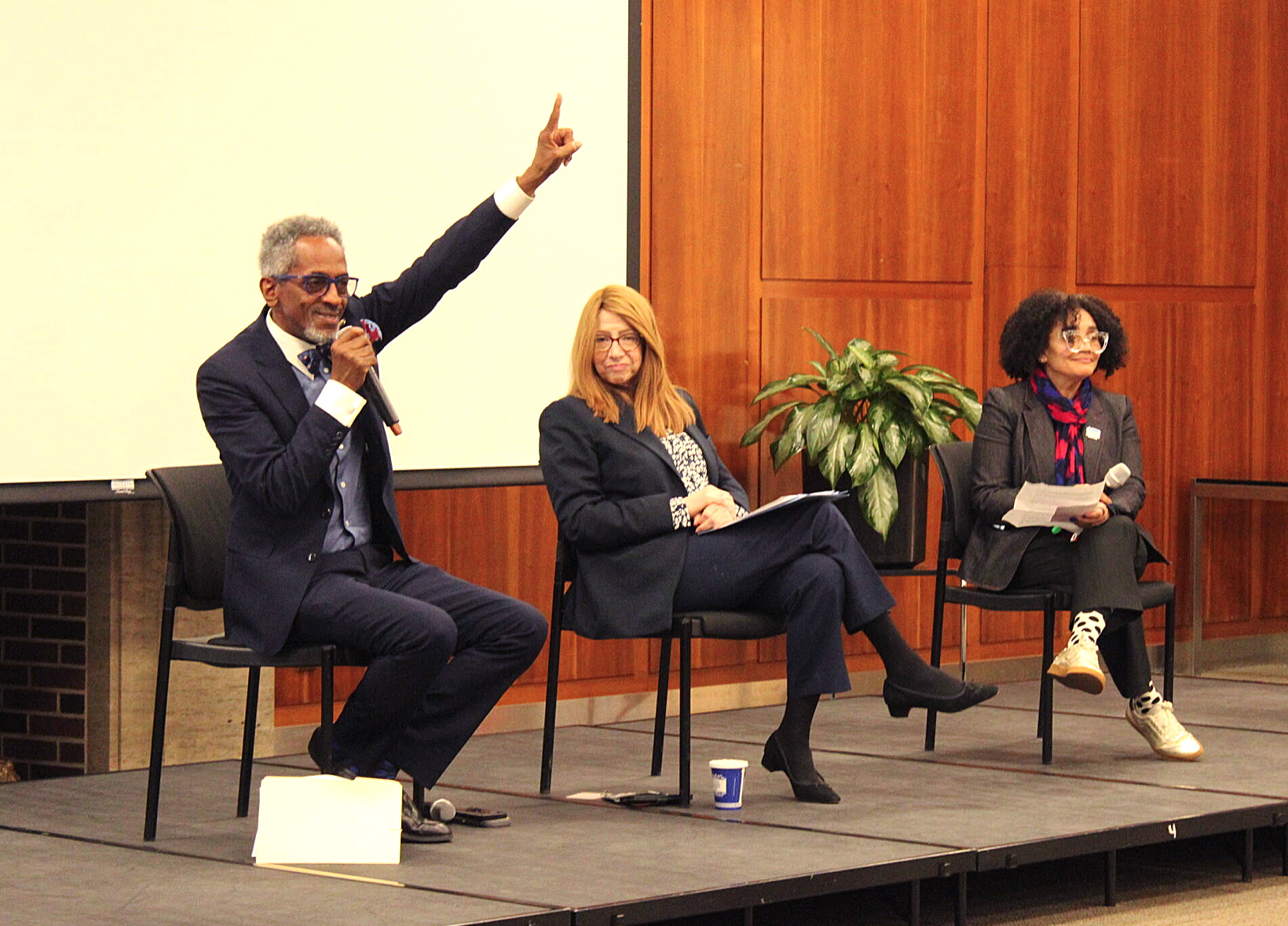
“The parks are a sense of renewal… there’s such a sense of tranquility and you can’t get that in every space of New York. Parks are the brick and mortar of New York City.”
—Al Taylor, Assembly Member
“The parks are a great equalizer… a hallmark of these public ‘third spaces.’ Income inequality is as stark as ever, and the city and state need to work to ensure all areas of the city are equally green.”
—Linda Rosenthal, Assembly Member
“I have a lot of hope because we have champions like you [gestures to panel] at the state level who are always standing up for what’s right—whether that’s supporting housing, survivors of domestic violence, or parks and green spaces that are so central to our communities.
I also have hope because I see so many people here who care about parks—and who have real power. We have a lot of power, but sometimes we don’t use it. So let’s make sure we use our voices to let NYC and our administration know that we need 1% as a minimum [for parks].”
—Maria Lizardo, Executive Director and Vice Chair of the Riverside Park Conservancy
Attendees left the Partner Summit inspired by new connections and practical ideas that they can share with their own communities.
The Conservancy extends heartfelt thanks to all the partners who joined this year’s Summit and to everyone who continues to care for and contribute to Riverside Park in so many meaningful ways: 75th Street Block Association, Arts Students League, Bloomingdale Aging in Place, Broadway Mall Association, Brotherhood Sister Sol, Carlos Oliveira Soccer Academy, Community Board 7, Community Board 9, Con Edison, The Garden People, Historic House Trust, Joan of Arc Statue Committee, Kids of Summer, Latino Outdoors, Natural Areas Conservancy, New Yorkers For Parks, New York-Presbyterian, Northern Manhattan Improvement Corporation, NYC Bird Alliance, NYC Parks, NYC Parks Greenthumb, Open House New York, Police Athletic League, Pickleball Volunteers of 110th Street, Ralph Ellison Memorial Association, Riverside Park Dog Run 87, Riverside Valley Community Garden, Riverside Tennis Association, Shorewalkers NY, Soldiers’ and Sailors’ Memorial Association, Tree Bed, LLC, Upper West Side Block Association, WE ACT for Environmental Justice, West Side Little League, West Side Soccer League.

Merritt Birnbaum closed the Summit on a promising note:
“I am feeling incredibly hopeful. I’m really glad that we had the opportunity to hear from our state elected officials and to be together…and to have all of you as partners as we confront a lot of very big challenges, some of which you saw today.”
About Riverside Park Conservancy
From 59th Street to 181st Street, from riverfront to city-side, Riverside Park Conservancy cares for and enhances six miles of parkland for present and future generations. Working together with NYC Parks, we make improvements as diverse as the park itself and the city it serves.